2026年11月17日
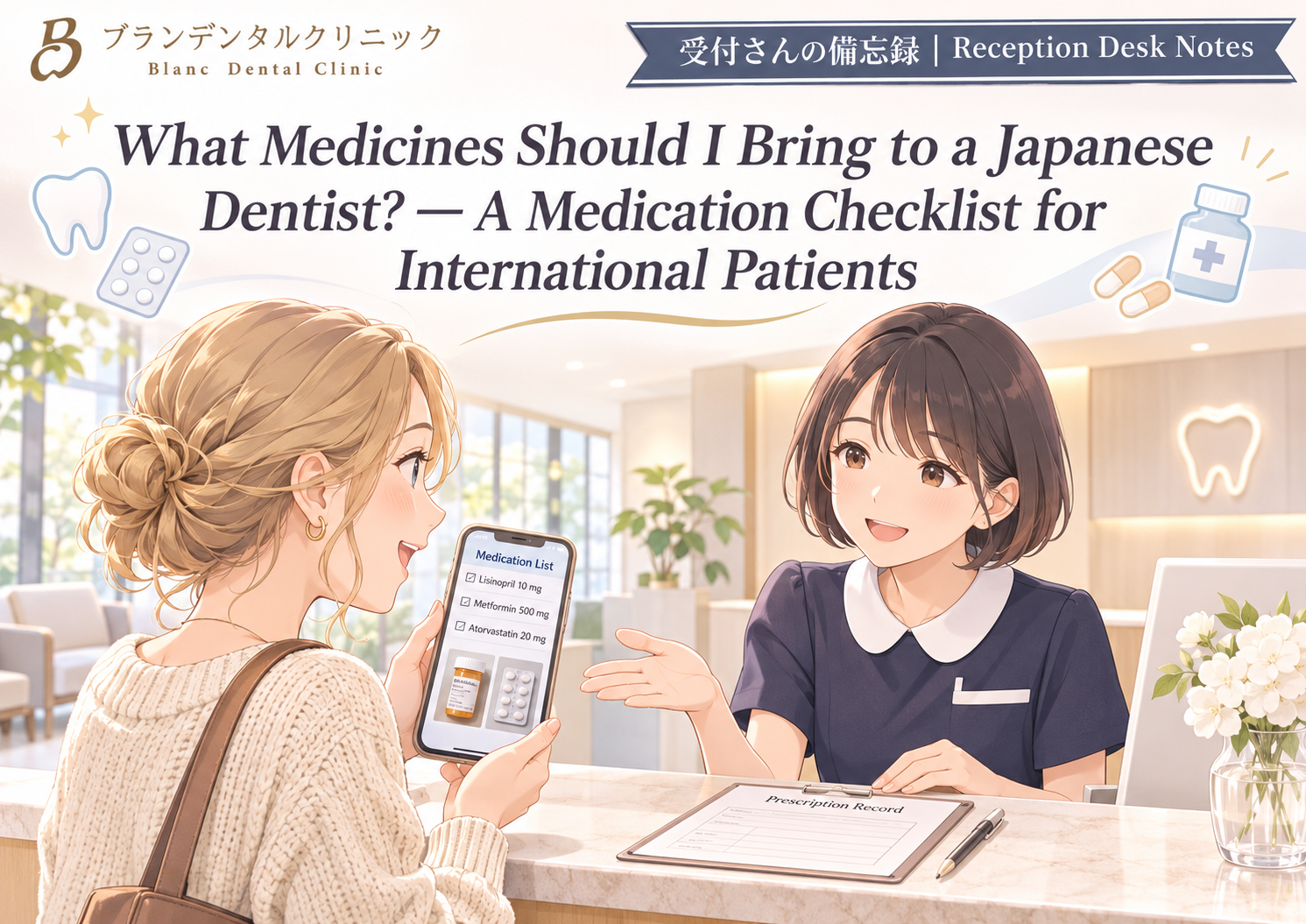
(Reception Desk Notes | To International Patients)
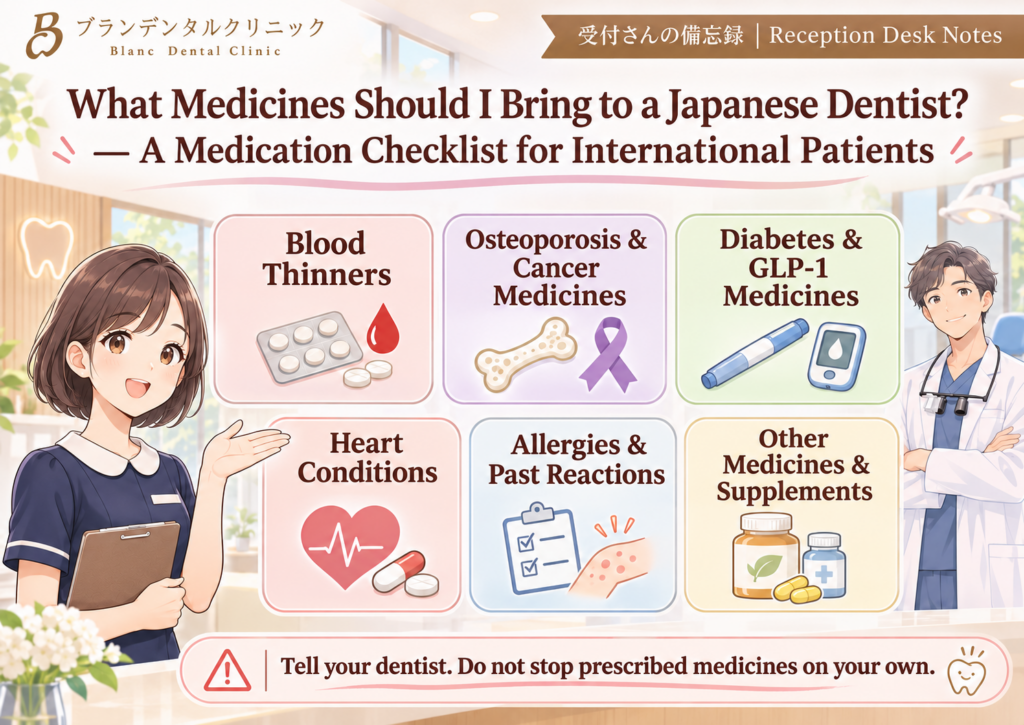
Visiting a dentist in Japan? The most useful thing you can bring is accurate information about your medicines. You do not necessarily need to carry every medicine bottle, tablet strip, or package. However, your dentist needs to understand what you take, what you have taken recently, and whether you have experienced any medication-related problems in the past.
This guide explains how international visitors and foreign residents can prepare medication information before a dental appointment in Japan. It covers medicines prescribed overseas, Japanese medication notebooks, injections, blood thinners, diabetes medicines, medication allergies, painkillers, and the rules for bringing medicines into Japan.
Important: This article provides general patient information, not individual medical advice. Do not stop, restart, increase, or change prescribed medicines on your own because of a dental appointment. Follow instructions from the healthcare professionals responsible for your treatment.
Introduction: Visiting a Dentist in Japan While Taking Medication
Imagine that you are visiting Hiroshima, Japan, when one of your back teeth suddenly starts hurting.
You find a dental clinic and arrange an appointment. Before leaving your hotel, you remember that you take medicine for high blood pressure every day. You also took a painkiller earlier that morning because your tooth was hurting.
Now several questions come to mind.
Should you bring all your medicines to the dentist?
Will a Japanese dentist recognize medicine prescribed in another country?
What if the medicine has a different brand name in Japan?
What if the label is not written in Japanese or English?
And what if you do not have a Japanese medication notebook?
These questions are relevant not only to tourists but also to international students, people working in Japan, and foreign residents who continue receiving treatment from doctors in other countries.
Medical information does not always move easily between countries, languages, and healthcare systems.
A medicine that is familiar in your home country may be sold under another name in Japan. Some products are not marketed in Japan at all. Even if you have Japanese health insurance, your overseas prescription history may not be available through Japanese electronic medical information systems.
At Blanc Dental Clinic in central Hiroshima, we consider a patient’s medical history an important part of dental treatment planning. From the reception desk, one of our roles is to help patients understand what information may be needed and how to prepare it.
You may wonder why a dentist needs to know about medication prescribed for conditions unrelated to your teeth.
Some medicines affect bleeding, blood sugar, blood pressure, infection risk, bone metabolism, or healing. Others may interact with local anesthetics, painkillers, antibiotics, or medicines used during sedation.
Some medicines can also contribute to dry mouth, changes in the gums, or other oral symptoms.
The good news is that you do not need to memorize every prescription or understand every medical term before visiting a dentist.
What matters most is providing reliable information and being clear about anything you do not know.
1. Quick Answer: What Should I Prepare Before My Dental Appointment?
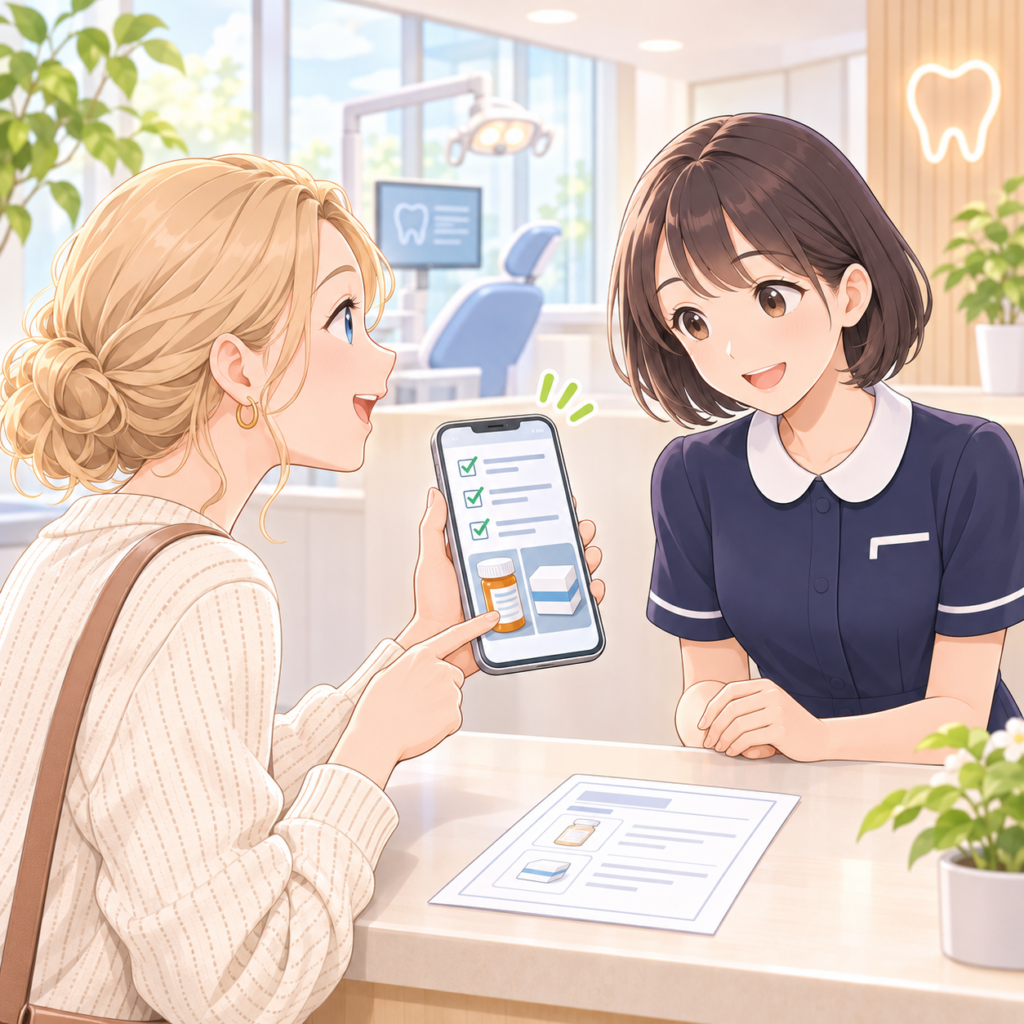
If you have only a few minutes before your appointment, start with the following checklist.
- Your current medication list: Include prescription medicines, even if they were prescribed outside Japan.
- Medicine names and ingredients: Record brand names, generic names, active ingredients, and strengths when available.
- How you use each medicine: Record the amount you take and how often you use it.
- Prescription records or photographs: Clear pictures of medicine labels may help when you do not have the original documents.
- Injections and infusions: Include relevant current and previous treatments, particularly those used for osteoporosis or cancer-related bone conditions.
- Over-the-counter products: Include painkillers, cold medicines, herbal products, vitamins, and supplements.
- Medication allergies: Record the suspected medicine, symptoms, approximate timing, and any emergency treatment.
- Medicines taken recently: If you already took something for tooth pain, note its name, amount, and approximate time.
If you have a Japanese medication notebook, known as an Okusuri Techo (お薬手帳), it can be helpful to bring it.
However, you do not need to obtain a Japanese medication notebook simply to request a dental appointment.
Not every patient needs every item listed above. A routine examination and a complicated tooth extraction may require different levels of medical information.
The goal is to make accurate information available so that the dental team can determine whether additional assessment or confirmation is necessary.
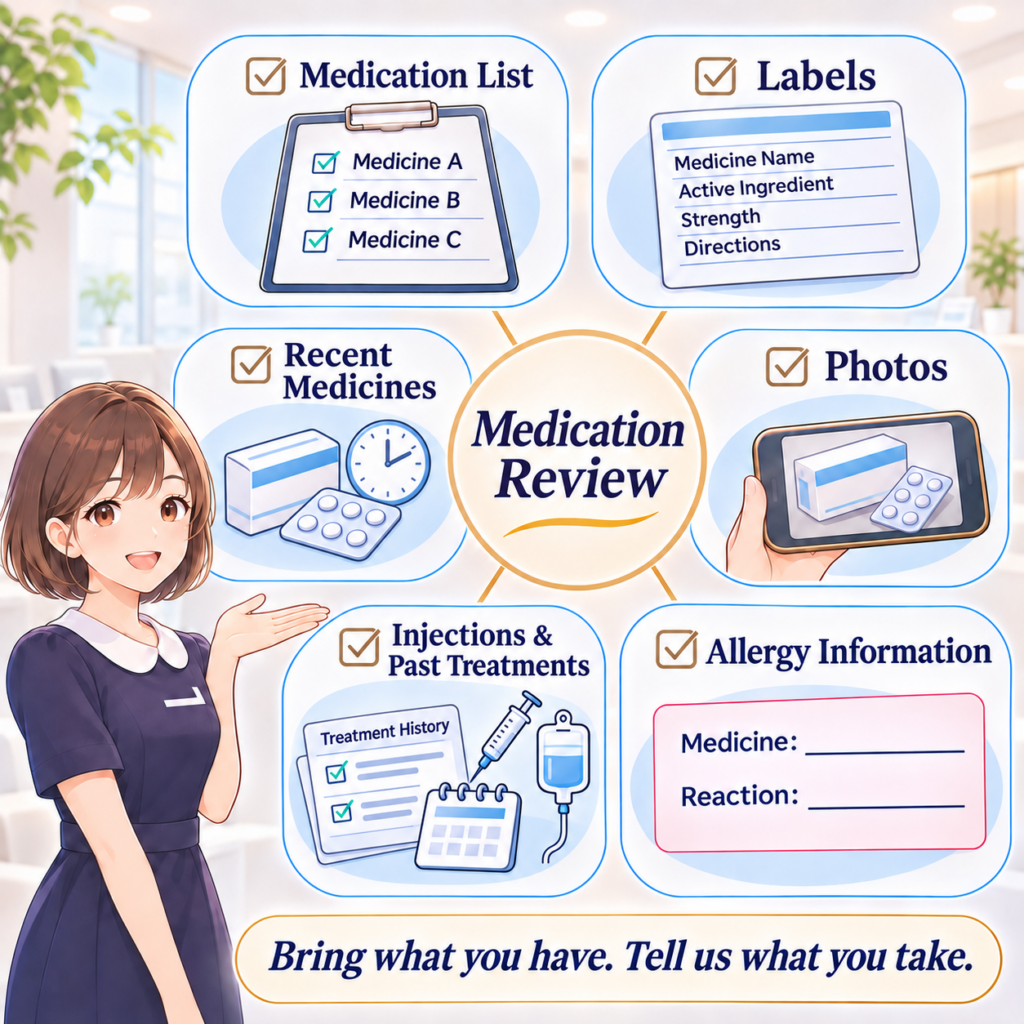
2. What Medication Information Should I Actually Bring?
Many patients imagine that they must carry every prescription bottle, tablet strip, and supplement container when visiting a Japanese dentist.
That is not always necessary.
The dentist needs enough reliable information to understand what medicines you use, why you use them, and whether they may affect treatment or prescribing decisions.
A Current Medication List
A current medication list is often the best starting point.
You can print it, write it on paper, or save it on your smartphone.
If you have several prescriptions, one updated list may be easier to review than a collection of unrelated documents.
Make sure the list reflects what you actually take. A prescription issued six months ago may no longer match your current treatment.
If a medicine has been stopped, replaced, or changed in strength or dose, update your list accordingly.
Prescription Records and Pharmacy Labels
A prescription record from your regular doctor or pharmacy can help identify a medicine, especially when it was prescribed overseas.
Useful details may include the original product name, active ingredient, strength, dispensing instructions, and the prescribing healthcare provider.
If you have changed the way you take the medicine since the prescription was issued, tell the dental team.
A record showing what was originally prescribed does not always show what you are currently using.
Photographs of the Original Packaging
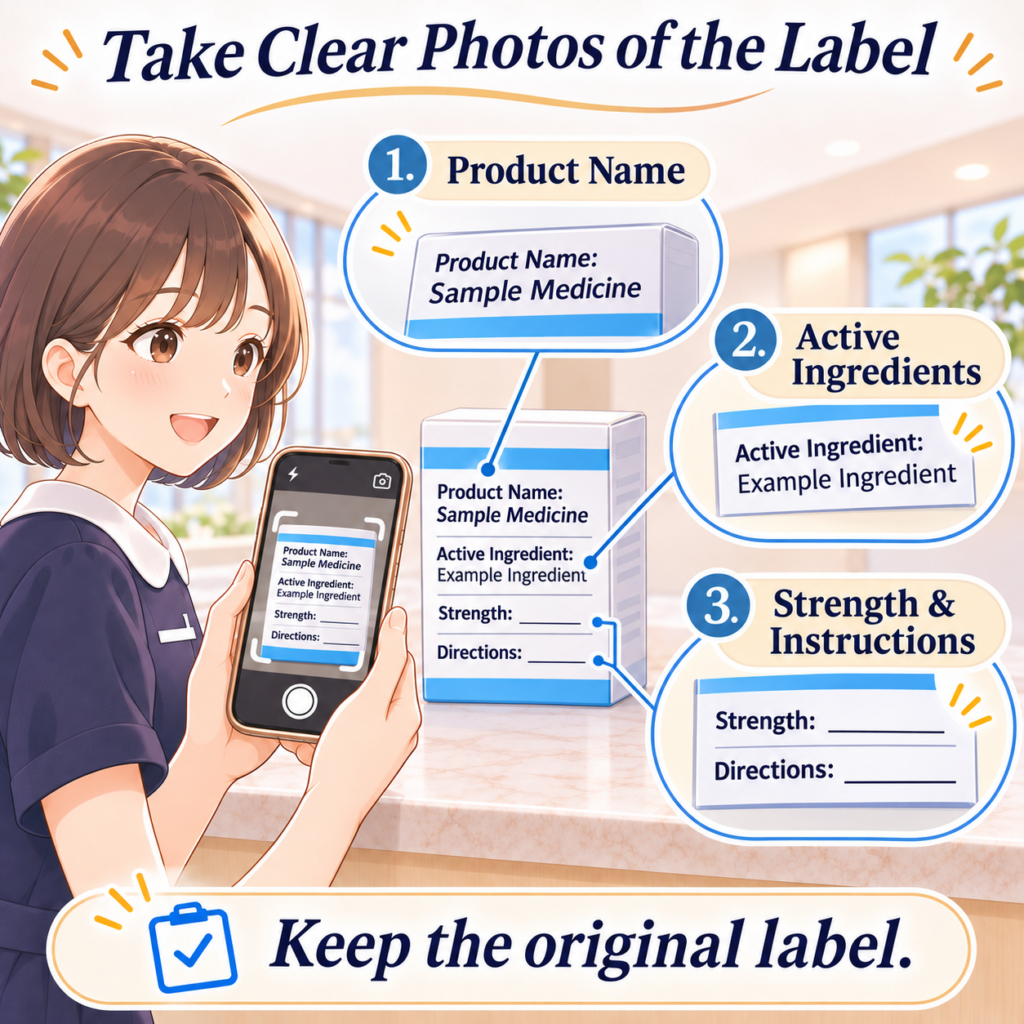
Photographs can be useful when bringing original medicine containers is inconvenient.
Try to photograph the product name and the ingredient information. The front of a package may show only a commercial name, while the side or back contains the active ingredients, strength, and instructions.
If you use several products, photograph them separately so their labels can be matched correctly.
A picture of a loose tablet is generally less reliable because different medicines can have similar colors, shapes, and markings.
When identification is uncertain, additional documentation may be necessary before making decisions involving that medicine.
Relevant Medical Letters and Allergy Records
If you have a complicated medical condition, an allergy card, hospital treatment summary, or letter from your physician may be helpful.
For example, a treatment summary may be relevant if you receive cancer therapy, osteoporosis injections, or medicines that significantly affect your immune system.
Not every patient needs a formal medical letter. The need for one depends on your health and the dental treatment being considered.
Do I Need to Bring the Actual Medicine Containers?
Not necessarily.
If your medication list and supporting records provide enough reliable information, bringing every original container may not be required.
However, if a medicine cannot be identified, its original labeled container or packaging may be useful.
If you routinely carry prescribed emergency medicines, such as a rescue inhaler, nitroglycerin, or an epinephrine auto-injector, keep them accessible according to your medical instructions and tell the dental team about them.
Reception desk tip: Bring information that identifies your medicines accurately. The goal is not to fill a bag with medicine packages; it is to make your medication history clear.
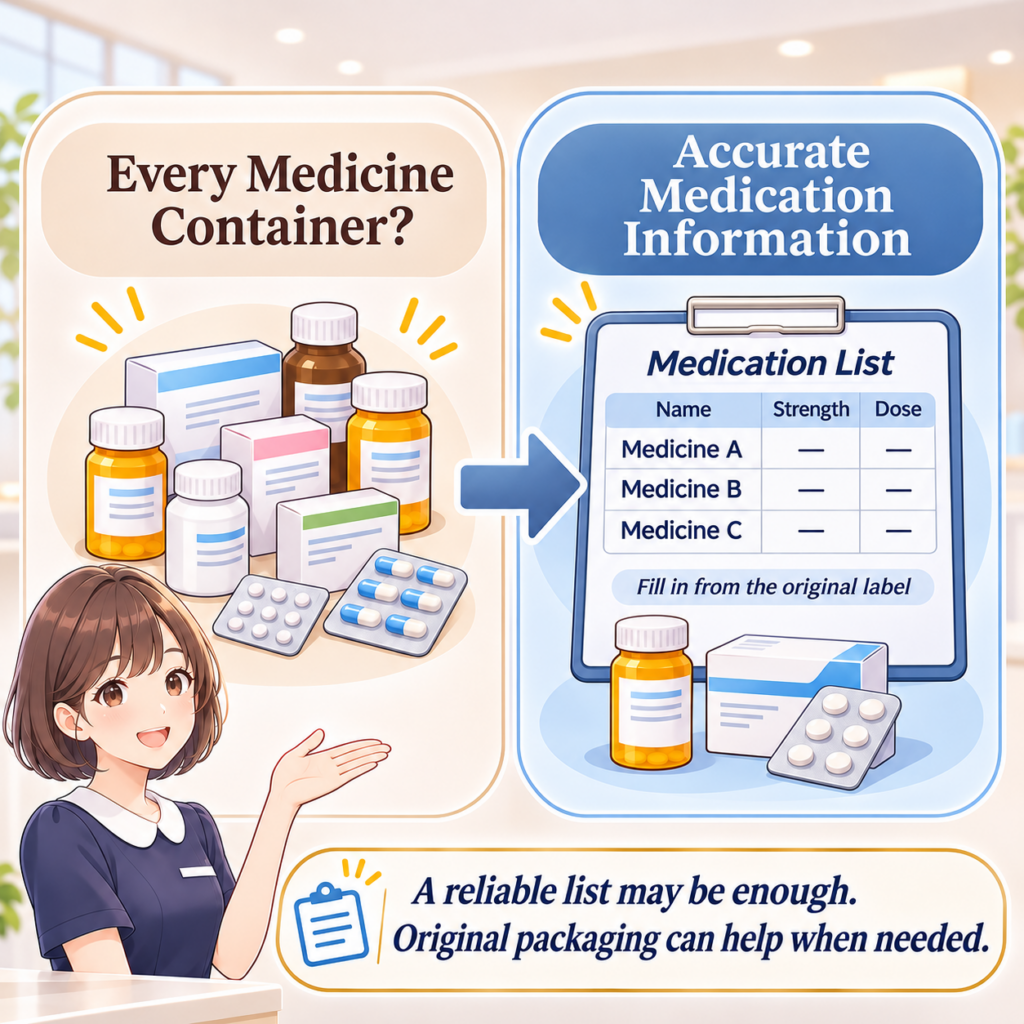
3. How to Prepare a Medication List from Your Home Country
If your medicines were prescribed outside Japan, preparing a simple list before your appointment can make communication easier.
You do not need to translate an entire medical record into Japanese. Start by keeping the original medicine names and adding accurate details about the ingredients and how you use them.
Brand Name and Generic Name
A brand name is the commercial name under which a company sells a medicine.
The generic name usually identifies the medicine’s active pharmaceutical ingredient.
The same ingredient may be sold under different brand names in different countries.
Recording both names, when available, may make the medicine easier to identify.
If you know only the brand name, do not guess the generic name. Show the original label or prescription instead.
Strength and Dose Are Different
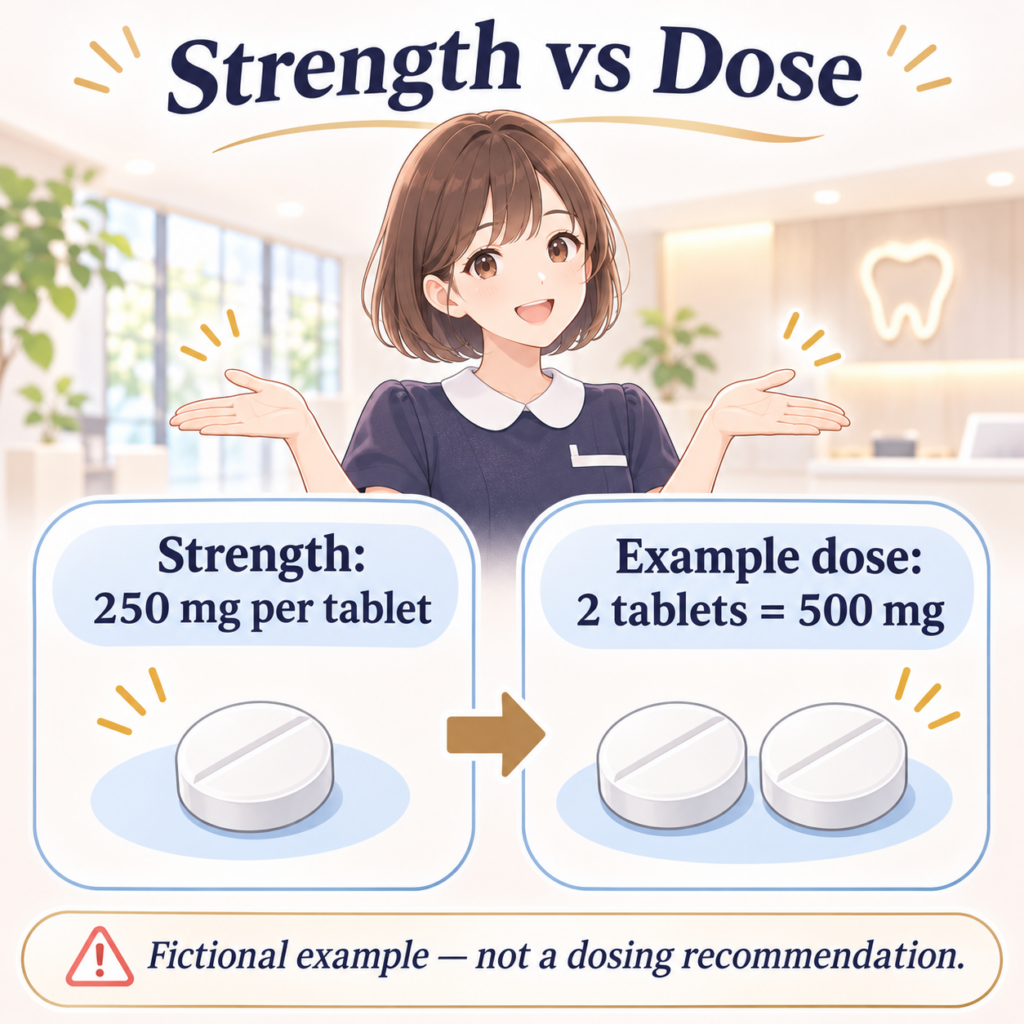
Strength describes how much active ingredient is contained in a tablet, capsule, or another measured unit of medicine.
Dose describes how much medicine you actually take at one time.
For example, imagine a fictional medicine containing 250 mg of an active ingredient per tablet.
If a patient takes two tablets at one time, the strength is 250 mg per tablet, while the total amount taken is 500 mg.
This example illustrates the difference between these terms. It is not a recommendation to take any particular medicine or dose.
Distinguishing the amount contained in one unit from the amount actually taken helps prevent errors in medication records.
How Often Do You Take It?
Use simple expressions such as once daily, twice daily, once weekly, or as needed.
A painkiller taken occasionally should not be recorded as though it were taken every day.
For injections or infusions, record the usual interval between treatments if known.
Why Do You Take the Medicine?
If possible, include the reason for taking each medicine.
Examples include “for high blood pressure,” “for diabetes,” “for osteoporosis,” “for heart rhythm problems,” or “for an autoimmune condition.”
This information matters because some medicines are prescribed for several different medical conditions.
A dentist should not have to assume your diagnosis from the medicine name alone.
When Did You Last Take It?
For some medicines, the date or time of the most recent dose is relevant to dental care.
This may include a painkiller taken shortly before your appointment, certain anticoagulants, insulin, or medicines relevant to sedation and surgery.
You do not need to remember the exact minute of every medicine you take. Record the timing when it is relevant and known.
If you are unsure, say so rather than inventing an answer.
A Medication List You Can Copy
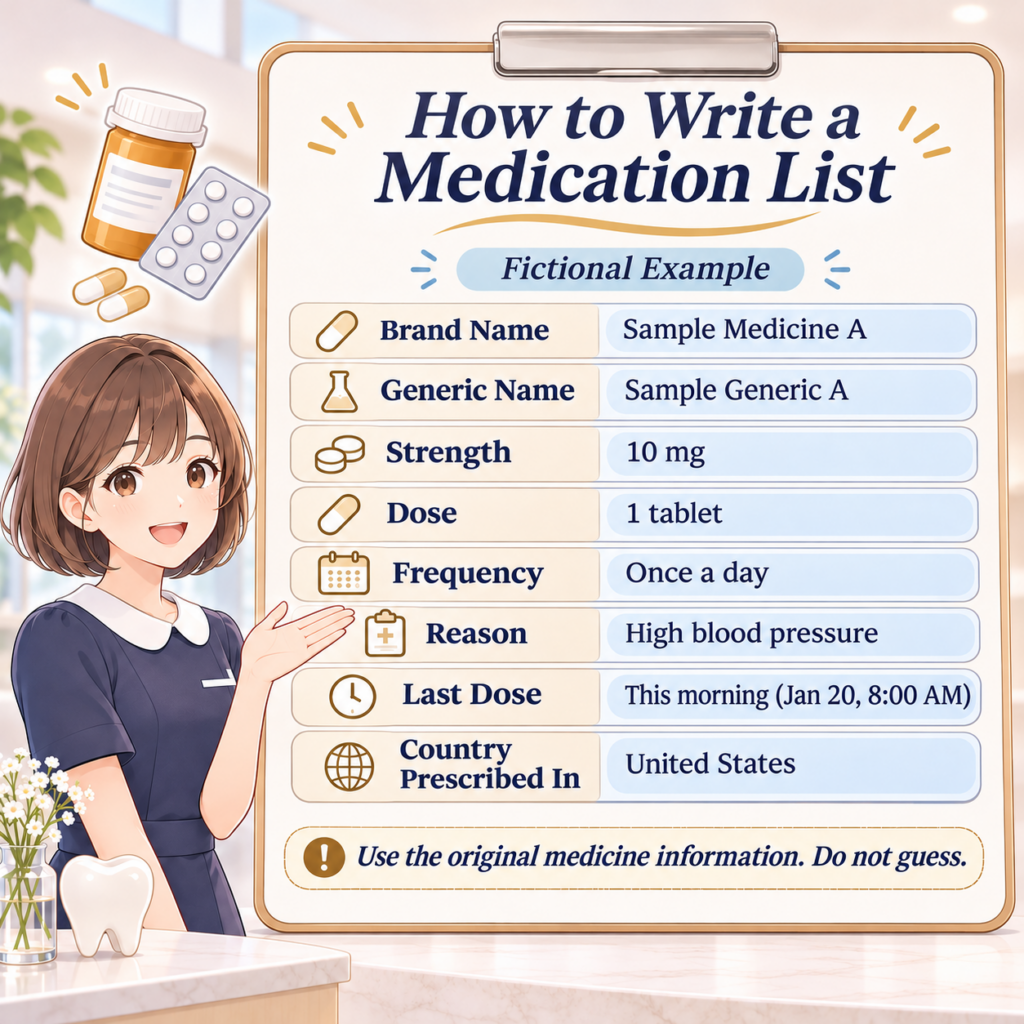
You can use the following format when preparing for a dental visit in Japan. Repeat the fields for each medicine you use.
For injections and infusions, add the last administration date and usual treatment interval.
For medicine taken only when needed, explain the circumstances in which you use it.
If a medicine was recently stopped, note the approximate date and reason when this information may be relevant.
If you take many medicines, consider asking your pharmacist or regular doctor for an updated medication summary.
Your list does not have to look perfect. Accuracy matters more than appearance.
4. Why Medicine Names Can Be Confusing in Japan
A medicine you recognize immediately in your home country may have a different name in Japan.
Sometimes the active ingredient is the same, but the brand name is different. Sometimes products with familiar-looking names contain different amounts or combinations of ingredients.
Acetaminophen and Paracetamol: Two Names for One Ingredient
A common example is acetaminophen, a name widely used in the United States, and paracetamol, a name commonly used in the United Kingdom and many other countries.
Both names refer to the same active ingredient. In Japanese, it is called アセトアミノフェン.
However, products containing this ingredient may have different strengths or additional ingredients.
Recognizing the shared ingredient is important because using two products containing it can result in accidental duplication.
Similar Brand Names Do Not Guarantee Identical Products
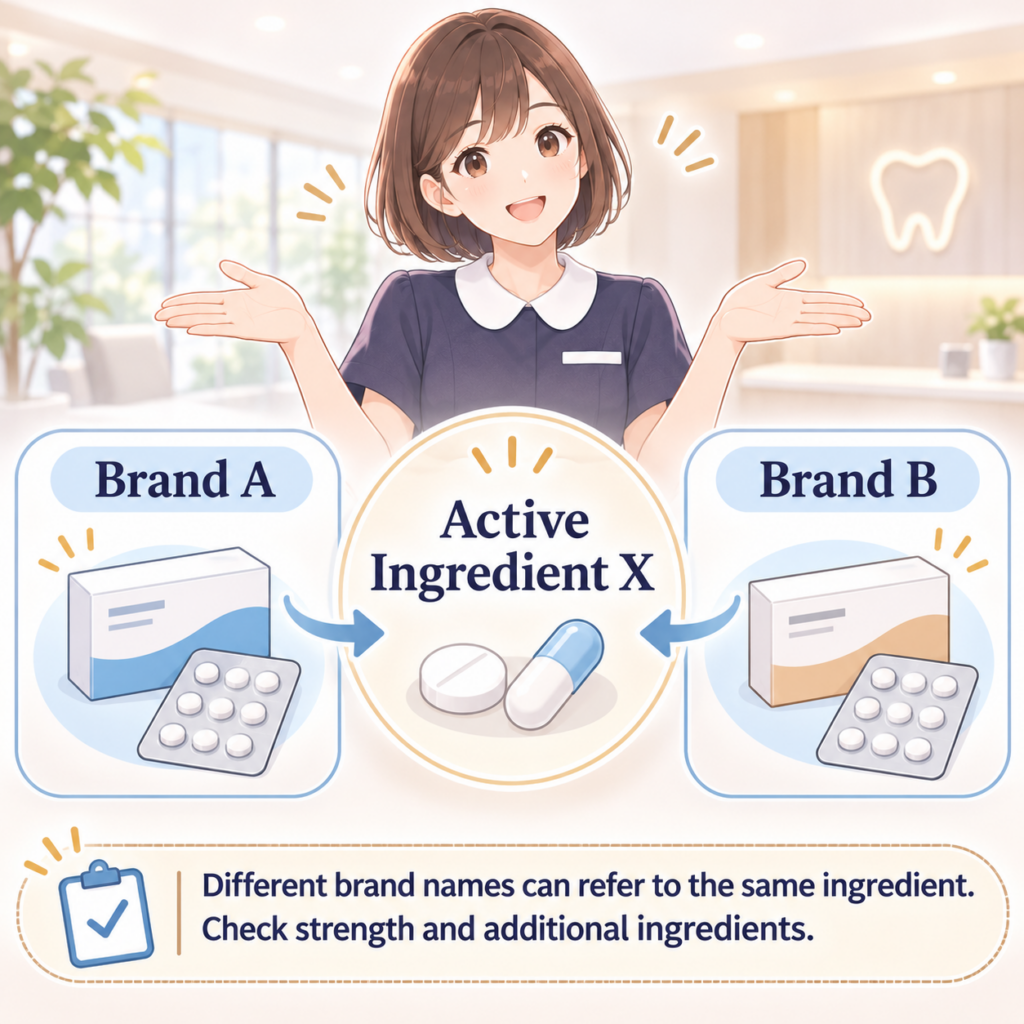
Some medicines, particularly cold and flu products, contain several active ingredients.
The front of a package may emphasize only the brand name. The complete ingredient list may appear in smaller print elsewhere.
Products sold in different countries can also differ in formulation, strength, or instructions.
That is why it is important to review the active ingredients rather than assuming similarly named products are equivalent.
What If the Label Is Written in Another Language?
You may have medicine labeled in Chinese, Korean, French, German, Spanish, Portuguese, or another language.
Keep the original label. If possible, obtain an ingredient list or prescription summary from the prescribing doctor or pharmacy.
Translation applications can help with basic communication, but they may make mistakes involving medicine names, quantities, units, or dosing instructions.
Do not replace the original information with a guessed Japanese name or an unverified translation.
If the medicine’s identity remains uncertain, the dentist or pharmacist may need further information before proceeding with certain treatments or prescriptions.
Can Japanese Medicine Databases Identify Every Foreign Medicine?
Japan’s Pharmaceuticals and Medical Devices Agency (PMDA) provides a medicine search service containing information about medicines within the Japanese regulatory system.
However, a Japanese database does not necessarily contain every brand sold overseas.
A product may not be marketed in Japan, or its formulation may differ from that of a Japanese product.
You can find official Japanese medicine information through the PMDA medicine search service (Japanese-language website).
The safest approach is to preserve the original medication information and allow healthcare professionals to determine whether a reliable identification can be made.
5. What If I Do Not Have a Japanese Medication Notebook?
In Japan, patients commonly use a medication notebook called an Okusuri Techo (お薬手帳).
This record helps patients, pharmacists, doctors, and other healthcare professionals review prescription information, including medicines supplied through different clinics and pharmacies.
Some patients use a paper notebook. Others use electronic medication record services.
Is an Okusuri Techo Required for a Dental Appointment?
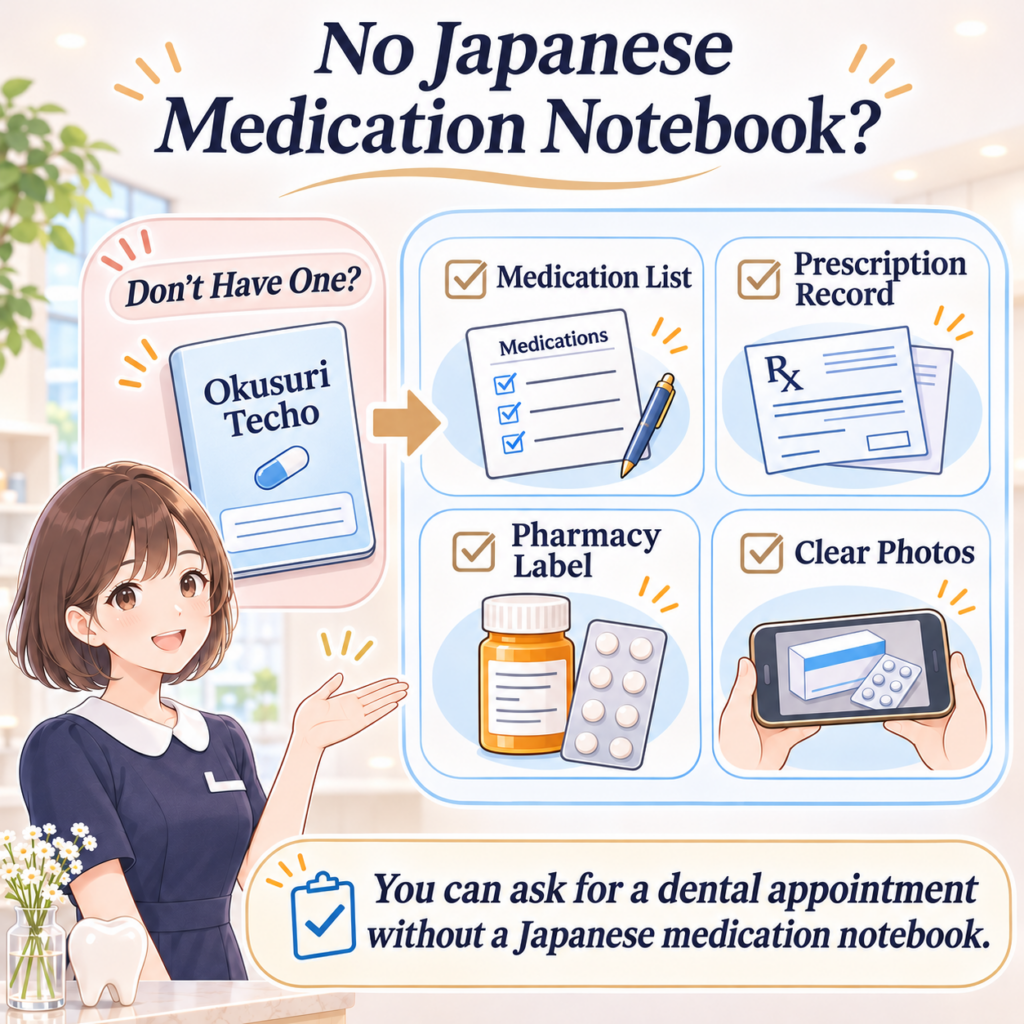
You do not need to obtain a Japanese medication notebook simply to request a dental appointment.
If you already have one, it is helpful to bring it or make the information available.
If you do not have one, a current medication list, prescription record, pharmacy label, or clear photograph of the medicine packaging may provide useful information.
However, not having a notebook does not eliminate the need for accurate medication information.
If an important medicine cannot be identified, a particular procedure or prescription may need to be delayed while further details are checked.
Will Japanese Electronic Records Show My Overseas Prescriptions?
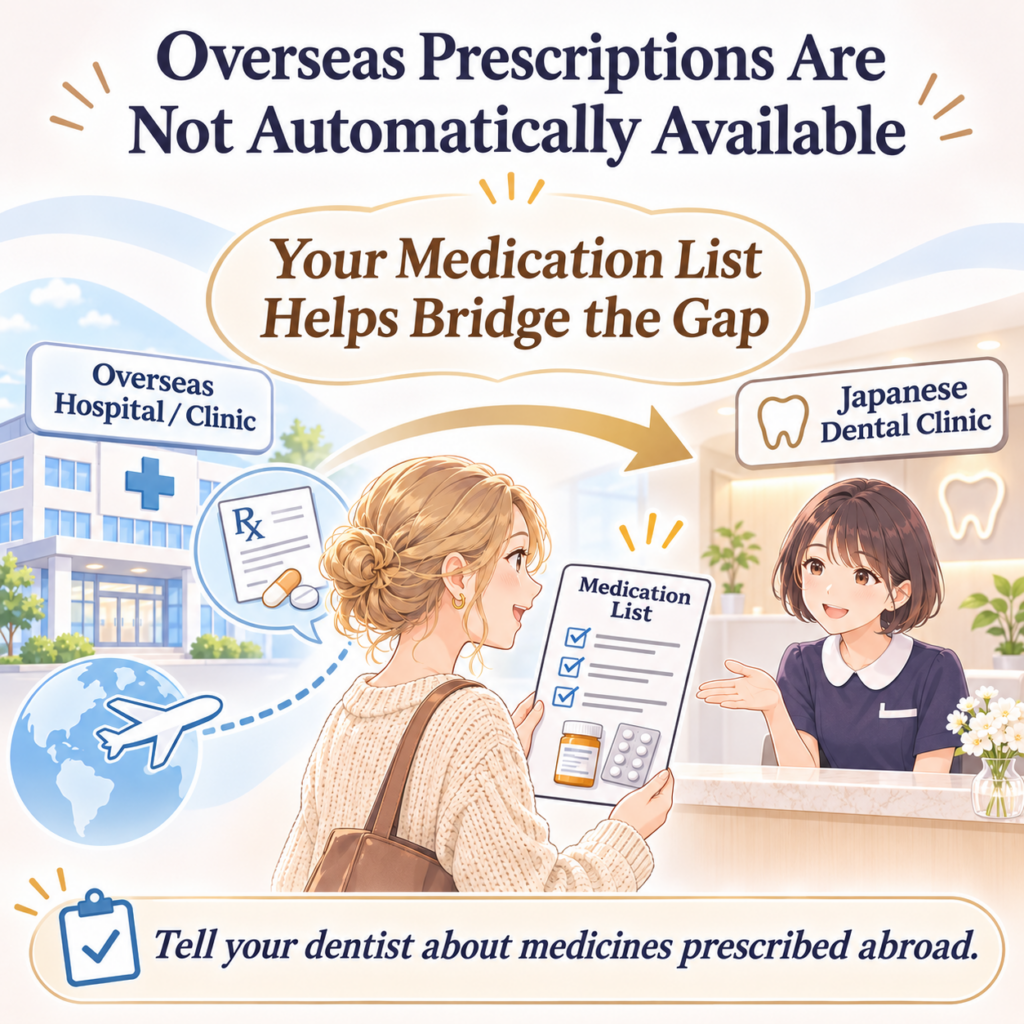
Do not assume that a dentist in Japan can automatically see all medicines prescribed to you in another country.
Japanese electronic health information does not necessarily include prescriptions issued overseas.
Even medicines used in Japan, such as certain over-the-counter products or supplements, may not appear in the electronic information available to a healthcare professional.
Providing your own updated medication information therefore remains important.
Japan Has an Official English/Japanese Dental Questionnaire
Japan’s Ministry of Health, Labour and Welfare has published multilingual medical explanation materials, including an English/Japanese dental questionnaire.
The questionnaire includes questions about medicines, vitamins, nutritional supplements, allergies, and problems experienced during previous dental treatment.
It also provides space to record medicine names and how they are used.
You can view the official English/Japanese Dental Questionnaire (PDF, March 2018).
This government document is a useful reference, but individual dental clinics may use their own questionnaires and procedures.
Reception desk tip: If you do not have an Okusuri Techo, explain what records you can provide. There may be another way to share the information needed for your care.
6. Which Medicines Are Especially Important for Dental Treatment?
Some medicines are particularly important because they influence bleeding, healing, blood sugar, infection risk, cardiovascular function, or the medicines a dentist can prescribe.
The following examples are not a complete list. Tell your dentist about all medicines you use, including products not mentioned here.
Blood Thinners: Anticoagulants and Antiplatelet Medicines
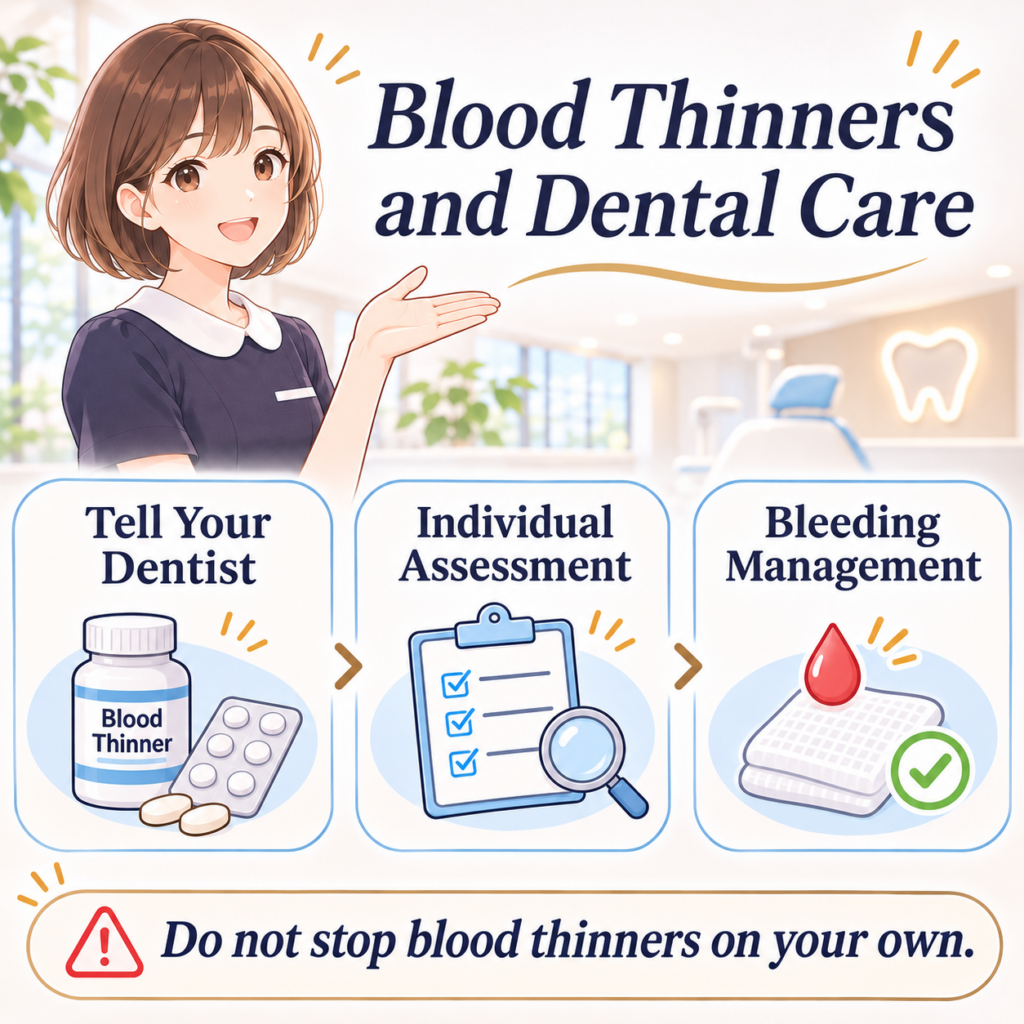
Some medicines reduce the blood’s ability to form clots or reduce platelet activity.
Patients often call them “blood thinners,” although anticoagulants and antiplatelet medicines work in different ways.
Examples include warfarin, apixaban, rivaroxaban, edoxaban, dabigatran, aspirin, and clopidogrel.
These medicines may be relevant when planning tooth extraction, periodontal surgery, or other procedures that can cause bleeding.
However, taking a blood thinner does not automatically mean that dental treatment is impossible.
For many patients, anticoagulant or antiplatelet treatment can be continued during routine dental procedures, and bleeding can often be managed with appropriate local measures.
Unnecessary interruption can increase the risk of blood clots, stroke, heart attack, or other serious complications.
The dentist considers the type of medicine, the medical condition, the planned procedure, and other relevant clinical information.
More complex situations may require consultation with the prescribing physician.
Do not stop blood thinners on your own because you expect to have a tooth removed.
For more information, see the American Dental Association’s guidance on anticoagulant and antiplatelet medicines in dentistry.
Osteoporosis Medicines and Bone-Related Cancer Treatments
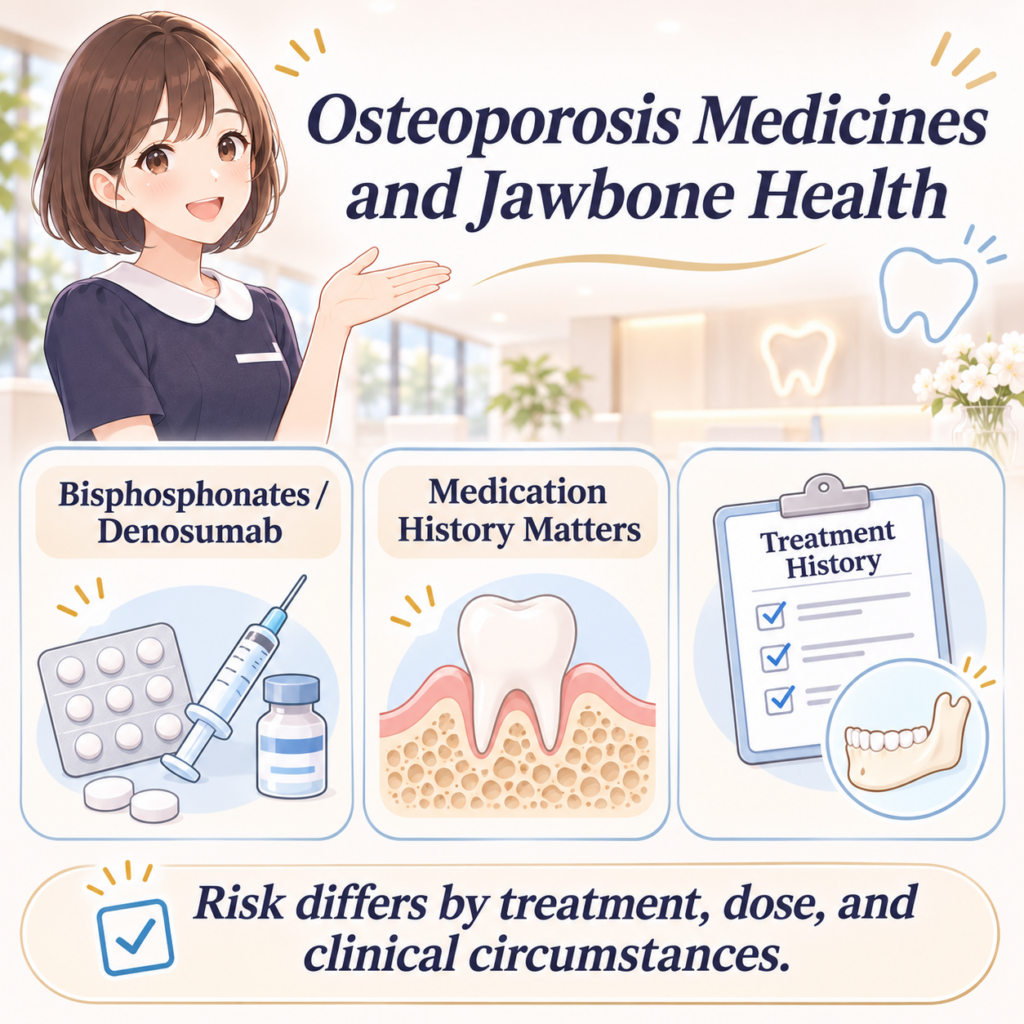
Some medicines used for osteoporosis or cancer-related bone conditions affect how bone is broken down and renewed.
Examples include bisphosphonates and denosumab.
Depending on the medicine and reason for treatment, they may be taken as tablets or administered by injection or infusion.
These treatments are important in dentistry because they are associated with medication-related osteonecrosis of the jaw, known as MRONJ.
MRONJ is an uncommon but potentially serious complication. The risk differs according to the medicine, dose, treatment indication, duration, oral infection, and other clinical factors.
For example, some higher-dose treatments used for cancer-related conditions carry a different level of risk from typical osteoporosis treatment.
Not everyone using these medicines develops MRONJ, and a history of treatment does not automatically rule out dental care.
Japanese guidance emphasizes the importance of controlling dental infection and avoiding routine preventive drug interruption without appropriate clinical assessment.
Unplanned interruption of denosumab for osteoporosis can also create problems because of effects on bone density and fracture risk.
If you currently receive or previously received these treatments, provide the medicine name, reason for treatment, approximate duration, and most recent dose if known.
Do not change an injection schedule or stop treatment without medical advice.
Further information is available from the American Dental Association’s explanation of osteoporosis medicines and MRONJ and the Japanese review of the MRONJ Position Paper 2023.
Diabetes Medicines
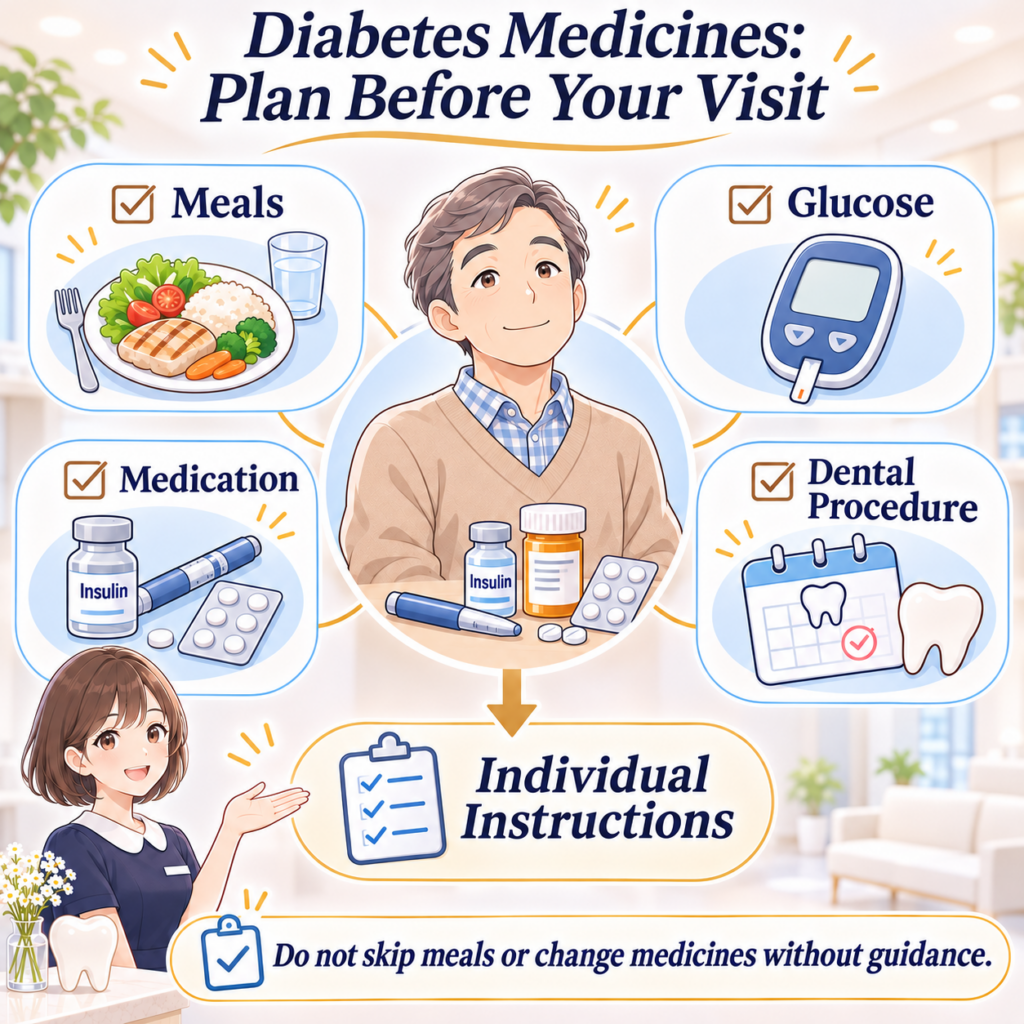
If you have diabetes, tell your dentist which medicines you use and how your condition is managed.
This may include insulin, oral glucose-lowering medicines, or injectable treatments.
Diabetes can affect gum health, infection risk, and healing after certain procedures.
Low blood sugar, or hypoglycemia, is another important consideration, particularly for patients using medicines that can cause it.
Changes to meal timing, prolonged fasting, or changes in insulin treatment may affect blood glucose.
For an ordinary dental appointment, do not skip breakfast or change diabetes medicines simply because local anesthesia is expected.
However, procedures involving sedation, general anesthesia, prolonged fasting, or significant surgery may require an individualized medication and meal plan.
If you use an insulin pump or continuous glucose monitor, or have experienced severe hypoglycemia, tell the dental team.
Relevant recent information from your diabetes doctor may also help when a complex dental procedure is planned.
GLP-1 Medicines for Diabetes or Weight Management
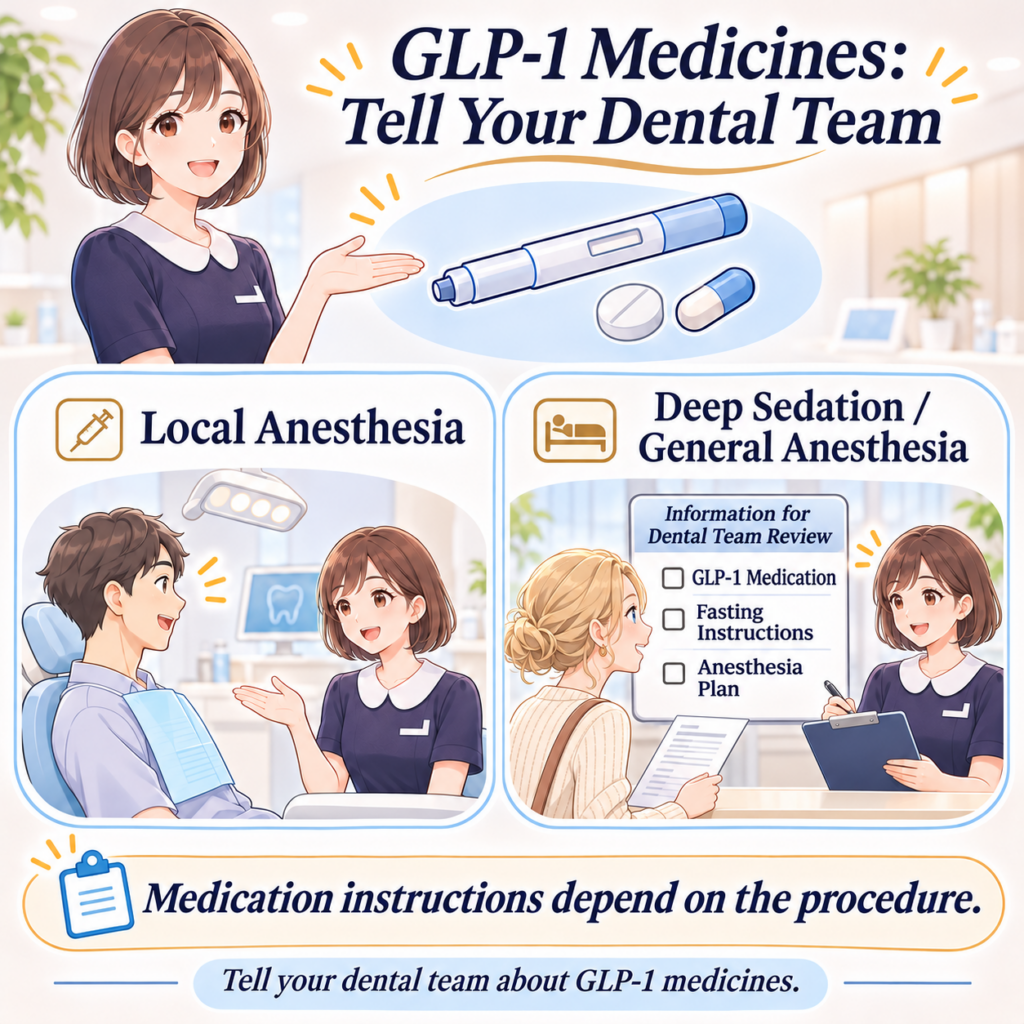
Medicines based on GLP-1 activity, including semaglutide and tirzepatide, are used for diabetes and, depending on the product, weight management.
International brand examples include Ozempic, Wegovy, Mounjaro, and Zepbound.
Some of these medicines slow gastric emptying, meaning food may remain in the stomach longer than usual.
This can be relevant during deep sedation or general anesthesia because stomach contents may increase the risk of aspiration.
However, using a GLP-1 medicine does not automatically mean that every patient must stop treatment before a dental appointment.
The 2026 American Diabetes Association Standards of Care recommend an individualized approach to perioperative management.
Relevant factors include why the medicine is prescribed, its dose, recent dose changes, gastrointestinal symptoms, current blood sugar management, the procedure, and the type of anesthesia.
Routine local anesthesia is not the same situation as deep sedation or general anesthesia.
Tell your dental team if you use a GLP-1 medicine, including when it is prescribed for weight management rather than diabetes.
Do not stop the medicine or begin fasting based only on general information found online. Follow the instructions given for your specific procedure.
Steroids, Immunosuppressants, and Cancer Medicines
Medicines that suppress or modify immune function can be relevant to dental care.
Examples include systemic corticosteroids, medicines used for autoimmune diseases, certain biological therapies, chemotherapy medicines, and other cancer treatments.
The effects vary greatly between medicines. Some influence infection risk, healing, the oral mucosa, or the choice of dental prescriptions.
Tell your dentist if you are undergoing cancer treatment, have recently completed chemotherapy, or receive treatment that significantly affects the immune system.
For certain patients, recent blood test results or information from the treating specialist may be needed before invasive procedures.
This does not mean that every patient taking an immune-related medicine needs special testing before every dental appointment.
The assessment depends on the medical condition, treatment, and planned dental procedure.
Heart and Blood Pressure Medicines
If you take medicines for high blood pressure, heart rhythm problems, angina, heart failure, or another cardiovascular condition, tell your dentist.
Some cardiovascular medicines may influence blood pressure during dental treatment or interact with painkillers and other medicines prescribed in dentistry.
Your medical diagnosis may also be important even when it cannot be identified from the prescription alone.
For example, a patient who has recently developed more frequent chest pain, more severe chest pain, or chest pain at rest may require urgent medical assessment rather than routine elective dental care.
If you have prescribed emergency medicine for angina, such as nitroglycerin, keep it accessible according to your medical instructions and tell the dental team.
Artificial Heart Valves, Infective Endocarditis, and Other Heart Conditions
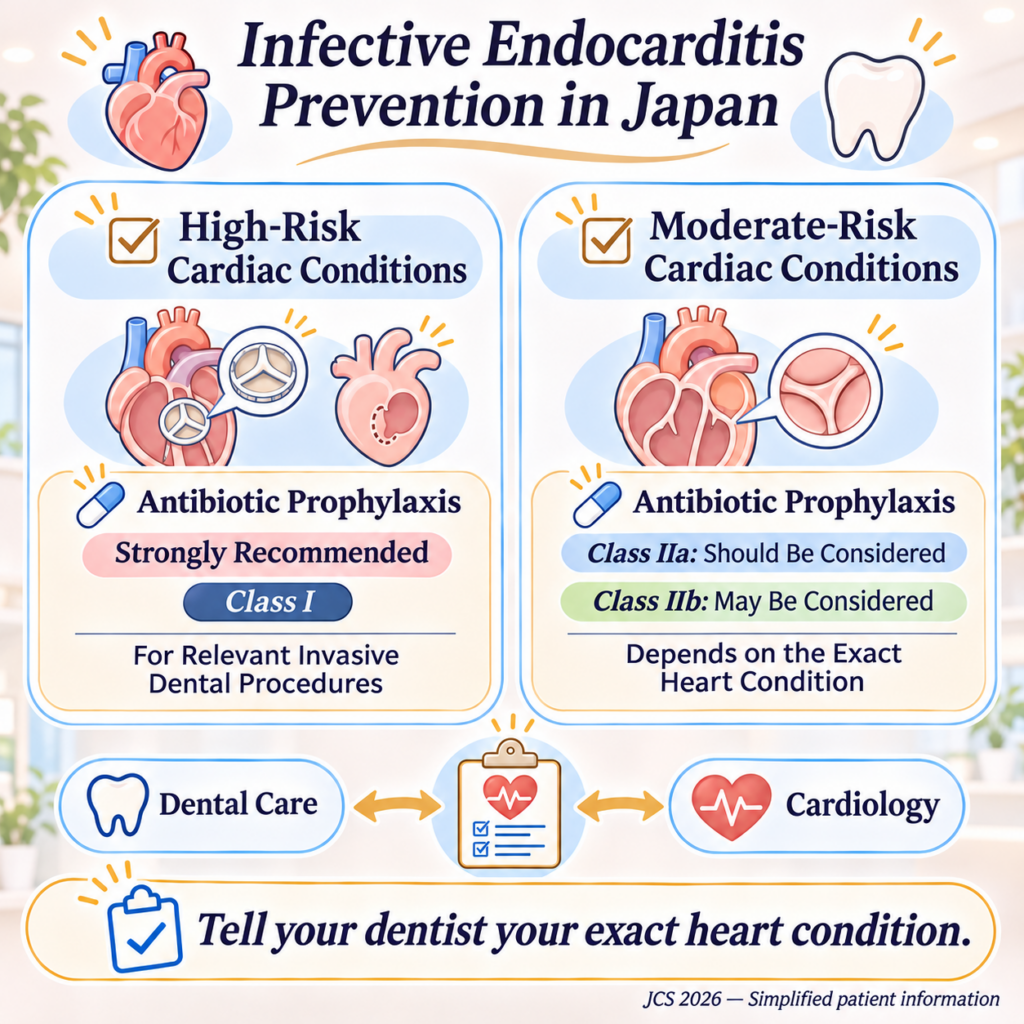
Some heart conditions are important in dentistry even when you do not currently take medicine for them.
If you have an artificial heart valve, have previously had infective endocarditis, have congenital heart disease, a heart valve disorder, or an implanted cardiac device, tell your dentist before treatment.
Infective endocarditis is a serious infection involving the inner lining of the heart or the heart valves.
Certain cardiac conditions increase the risk of developing infective endocarditis or experiencing serious complications if it occurs.
For some patients, preventive antibiotics may be indicated before invasive dental procedures that can cause bleeding and allow oral bacteria to enter the bloodstream.
An important point for patients receiving dental care in Japan is that Japanese and overseas guidelines do not classify every patient in exactly the same way.
The Japanese Circulation Society’s JCS 2026 Guideline on the Management of Infective Endocarditis divides relevant underlying cardiac conditions into high-risk and moderate-risk categories, with different strengths of recommendation for antibiotic prophylaxis.
For patients in the high-risk category, preventive antibiotic administration is strongly recommended before relevant invasive dental procedures.
For certain moderate-risk cardiac conditions, prophylaxis should be considered or may be considered, depending on the exact diagnosis and risk category.
The recommendation is therefore not identical for every patient with a cardiac condition.
Relevant procedures can include tooth extraction, periodontal surgery, scaling, certain implant procedures, and treatment of infected root canals when the procedure is invasive and can cause bleeding or bacteremia.
However, preventive antibiotics are not routinely required for every patient with heart disease or for every dental procedure.
For example, the presence of a cardiac implantable electronic device does not automatically mean that the patient belongs to the highest-risk category. The device type, associated heart conditions, and other details must be considered.
Similarly, a heart murmur does not necessarily indicate a condition requiring prophylaxis.
Having an artificial joint replacement also does not, by itself, usually establish a need for routine antibiotic prophylaxis before dental treatment.
The dentist will review the exact diagnosis, the planned procedure, the patient’s medical history, and whether consultation with a cardiologist or another treating physician is needed.
If you have a letter or medical record describing your heart condition, bring it when relevant.
If an overseas dentist has previously given you antibiotics before dental treatment, explain why. Do not assume that the same prescription is automatically required in Japan, or that it is automatically unnecessary.
Do not begin leftover antibiotics or take preventive antibiotics on your own.
For detailed Japanese recommendations, see the JCS 2026 Guideline on the Management of Infective Endocarditis (English full text).
For comparison, the American Dental Association also publishes guidance on antibiotic prophylaxis before dental procedures. The recommendations should be interpreted in the context of the country where care is being provided.
Antidepressants, Psychiatric Medicines, and Seizure Medicines
Medicines for depression, anxiety, sleep disorders, epilepsy, ADHD, and other neurological or psychiatric conditions should also be included in your medication list.
Some may interact with painkillers, antibiotics, or sedation medicines. Others may contribute to dry mouth or changes in the gums.
Taking one of these medicines does not automatically prevent dental treatment.
The purpose of sharing this information is to help the dental team plan appropriate care, not to make assumptions about you or your condition.
Inhalers, Emergency Medicines, and Medicines Used Only When Needed
If you use a rescue inhaler for asthma, an epinephrine auto-injector for severe allergies, or another prescribed emergency medicine, tell the dental team.
Explain when you normally need it and whether you have used it recently.
Keep emergency medicines accessible according to the instructions given by your treating clinician.
Medicines used only occasionally still belong in your medication history when they may affect dental care.
Over-the-Counter Medicines, Herbal Products, and Supplements
Do not limit your medication list to products prescribed by doctors.
Over-the-counter painkillers, cold medicines, antihistamines, vitamins, herbal products, traditional medicines, and supplements may all be relevant.
Some products contain active ingredients that interact with prescription medicines or affect bleeding, sedation, or other aspects of care.
Not every supplement causes a clinically important interaction, but accurate disclosure allows the dental team to assess the products you actually use.
If you use a traditional medicine from your home country, try to provide its ingredient list as well as its product name.
Medicines During Pregnancy or Breastfeeding
If you are pregnant, think you may be pregnant, or are breastfeeding, tell your dentist before treatment and before receiving new prescriptions.
Include prescription medicines, over-the-counter painkillers, vitamins, and supplements in your medication history.
Some medicines require additional consideration during pregnancy or breastfeeding. The appropriate choice depends on the medicine, the patient’s health, the stage of pregnancy when relevant, and the proposed dental treatment.
However, pregnancy does not automatically mean that necessary dental treatment must be postponed.
Many preventive, diagnostic, and restorative dental procedures can be performed safely during pregnancy. Necessary treatment for dental pain or infection should not be avoided solely because a patient is pregnant.
The dental team can consider your individual circumstances and coordinate with your obstetrician or another treating clinician when appropriate.
Do not stop medicines prescribed for pregnancy-related or other medical conditions without professional advice.
See the American Dental Association’s guidance on pregnancy and dental care.
7. Do Injections and Medicines Used in the Past Matter?
Yes. Some medicines remain relevant to dental assessment even when they are no longer being used.
This is particularly important for medicines administered at a hospital every few weeks or months.
Because these medicines are not taken daily, they may be forgotten when a patient is asked about regular medication.
Not Every Medicine Is a Tablet
Medicines may be given by injection, intravenous infusion, inhalation, a skin patch, or another route.
Sometimes a hospital administers treatment and the patient does not have a labeled medicine container at home.
In that situation, a treatment summary or administration record may help identify the medicine.
Osteoporosis and Cancer-Related Treatments
If you have received medicines affecting bone metabolism, including certain osteoporosis treatments or bone-related cancer therapies, tell your dentist.
Some of these treatments may remain clinically relevant after administration or discontinuation.
The exact significance differs according to the medicine, dose, treatment indication, and other clinical factors.
A previous treatment does not automatically mean that a tooth cannot be extracted or that routine dentistry is unsafe.
However, the dentist needs this history to make an informed assessment.
What Should I Record About an Injection or Infusion?
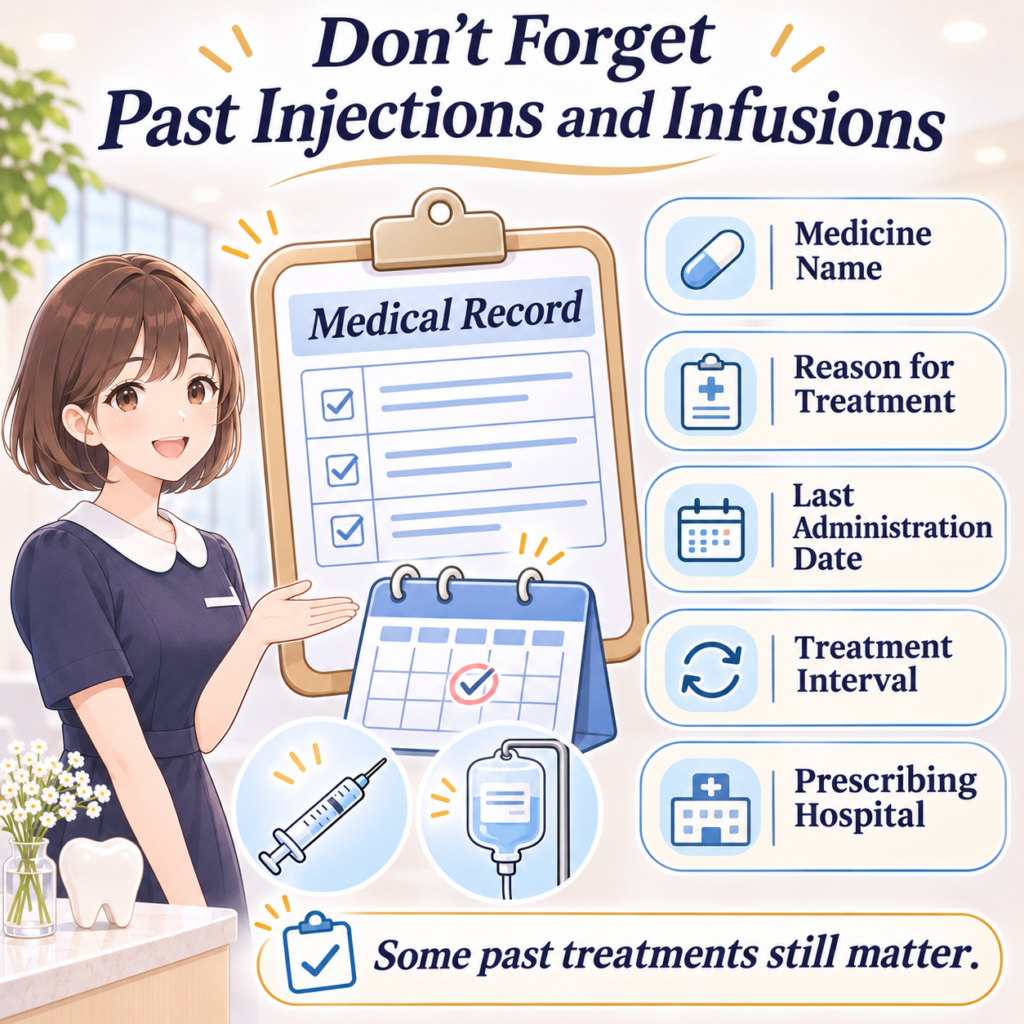
Where possible, prepare the medicine name, reason for treatment, usual treatment interval, last administration date, and prescribing hospital or clinic.
If the treatment was given in another country, ask the overseas medical institution for a medication or treatment summary when one is needed.
If you remember the medical condition but not the drug name, explain that rather than trying to identify the medicine from memory alone.
Reception desk tip: When checking your medication history, ask yourself not only “What tablets do I take?” but also “What injections, infusions, or other treatments have I received?”
8. What If I Already Took Painkillers Before My Dental Appointment?
Many people take a painkiller before seeking dental care, especially when tooth pain develops while traveling.
If you already took medicine for your toothache, tell the dentist.
The useful details are what you took, how much you took, and approximately when you took it.
Explain the Product, Amount, and Time
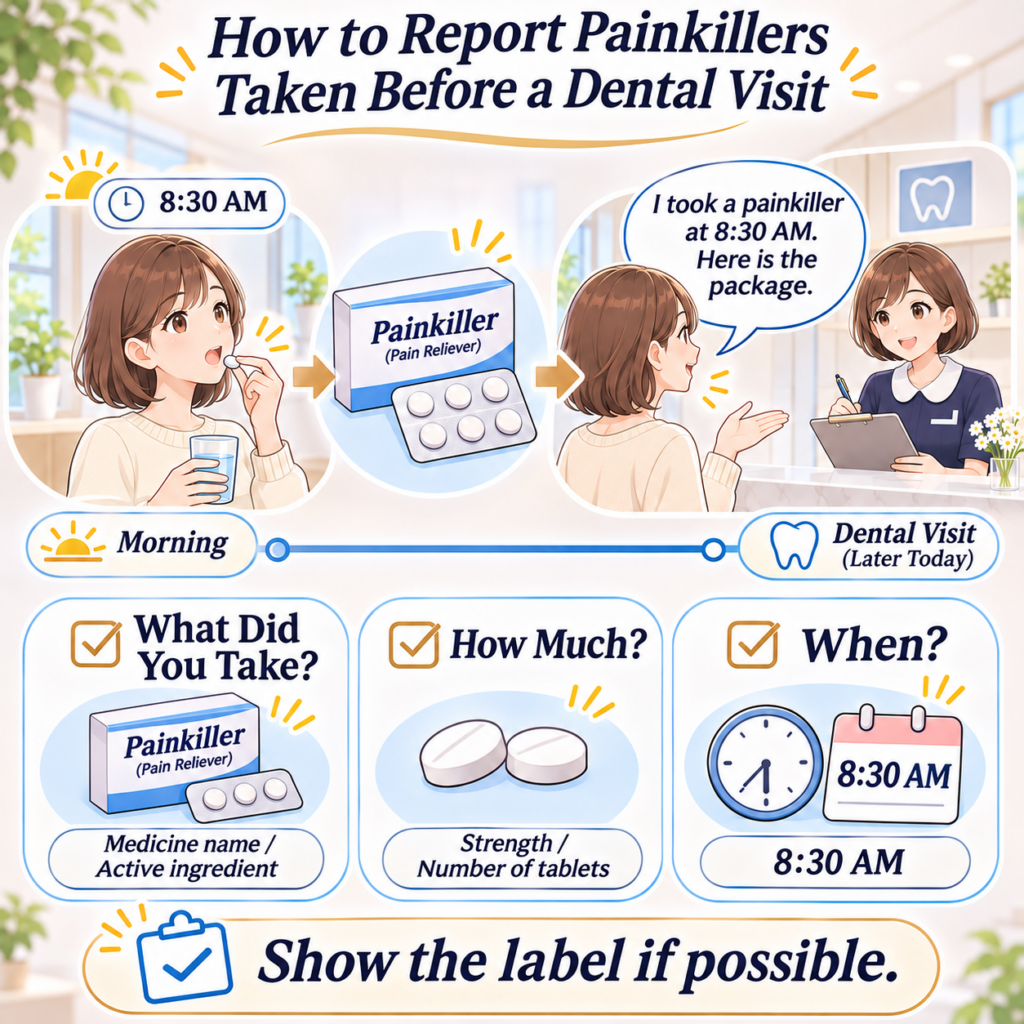
Instead of saying only “I took a painkiller,” try to provide the product name, active ingredient, strength, number of tablets or other quantity taken, and approximate time.
For example, you might say, “I took two tablets at about 8:30 this morning. I have a photo of the package.”
If you took several doses, explain the approximate schedule.
If you do not remember the exact time or amount, say so. Do not guess merely to make your account sound complete.
Check for Duplicate Ingredients
Acetaminophen and paracetamol refer to the same active ingredient.
Travelers may not realize that a product obtained in Japan contains the same ingredient as medicine brought from home.
Some cold and flu medicines also contain pain-relieving ingredients.
Accidentally taking more than one acetaminophen-containing product can lead to overdose and serious liver injury.
The U.S. Food and Drug Administration advises patients to check the active ingredients of all medicines they use and avoid unintentionally combining products containing acetaminophen.
You can read the FDA’s consumer guidance on avoiding acetaminophen overdose.
Do Not Increase the Dose Simply Because the Pain Continues
Dental pain can return after temporary relief from a painkiller.
However, taking more medicine than directed does not necessarily improve the result and can increase the risk of harm.
Do not increase the dose or combine painkillers beyond the instructions without appropriate professional advice.
A painkiller may reduce symptoms without treating the dental condition causing the pain.
If the pain persists, appropriate dental assessment may be needed to identify the underlying cause.
What If I Took Antibiotics from My Home Country?
Some travelers carry antibiotics left over from previous treatment.
However, antibiotics are not required for every toothache.
Many dental infections and painful dental conditions need treatment directed at the source of the problem rather than antibiotics alone.
Do not start leftover antibiotics simply because a tooth hurts.
If you have already taken an antibiotic, tell the dentist its name, strength, amount taken, when you started it, and the time of your most recent dose.
This information can help the dentist assess the situation and avoid unnecessary or inappropriate additional prescribing.
For further information, see the American Dental Association’s guidance on antibiotics for dental pain and swelling.
If you have injured or broken a tooth during your visit to Japan, our related article Broke a Tooth in Japan—Can a Dentist See Me Today? explains how to describe the injury and seek assessment.
9. What Should I Tell My Dentist About Medication Allergies?
A history of medication allergies or unexpected reactions is important when planning dental care.
However, simply writing “allergic to medicine” may not provide enough information for the dentist to assess what happened.
Tell the Dentist Which Medicine Was Involved
If you know the medicine’s name, provide it.
If you remember only that it was an antibiotic, painkiller, local anesthetic, or another category of medicine, tell the dental team what you know.
A previous prescription, hospital record, or allergy card may help identify the exact product.
Describe the Symptoms
Try to describe what actually happened.
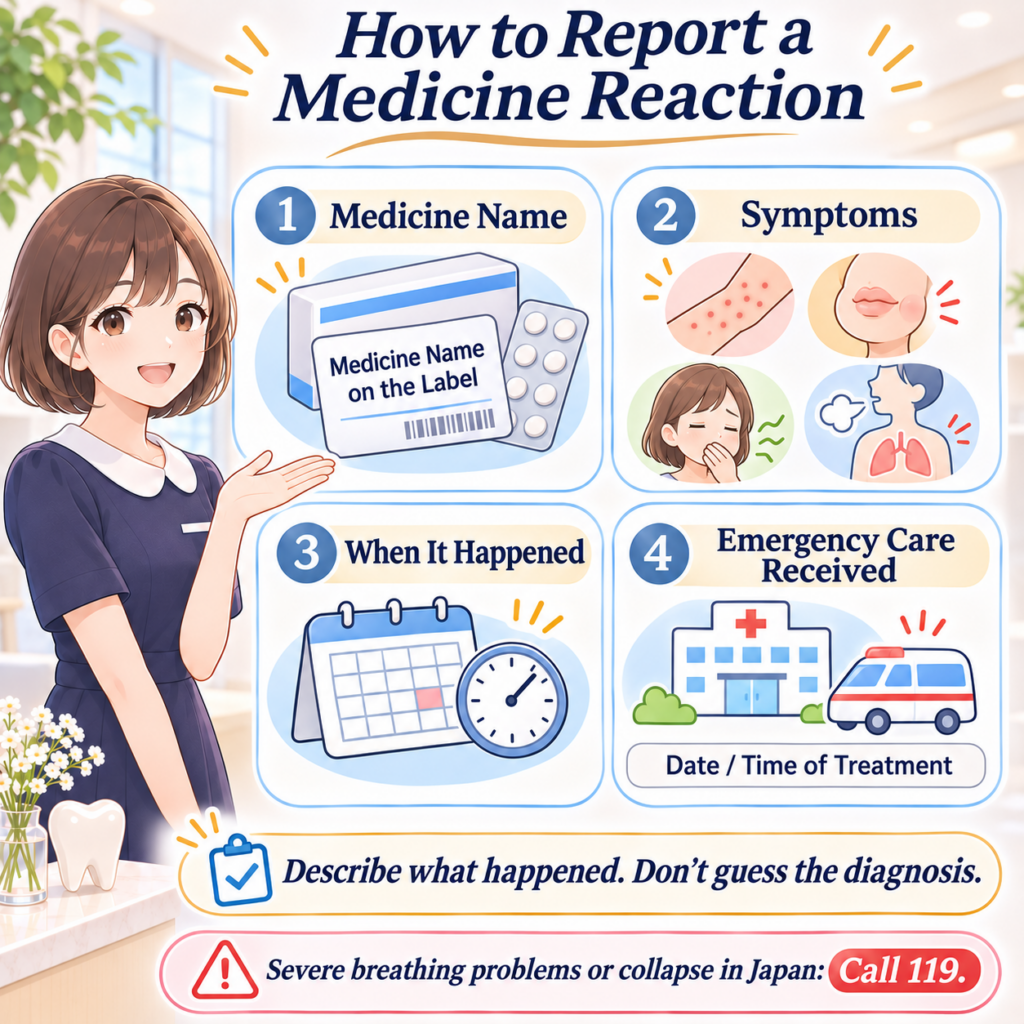
Examples include rash, hives, swelling of the lips or face, difficulty breathing, dizziness, fainting, nausea, or diarrhea.
These symptoms do not always have the same cause, and not every adverse reaction is an immune-mediated allergy.
The receptionist and patient do not need to determine the medical mechanism themselves.
The useful first step is to provide an accurate account.
Explain the Timing and Any Emergency Treatment
Did the symptoms begin within minutes, several hours later, or after several days?
Did you need an ambulance, hospitalization, oxygen, an epinephrine injection, or another emergency treatment?
If you were diagnosed with a severe drug reaction, such as anaphylaxis or Stevens–Johnson syndrome, tell the dentist and bring any available records.
It can also help to mention medicines that you have safely used since the reaction, if this information is known.
Side Effects and Allergies Are Not Always the Same
Nausea or diarrhea after taking a medicine may be an adverse effect rather than an allergy.
Nevertheless, a significant previous reaction should be reported because it may influence the choice of medicine.
For example, some people who report a penicillin allergy are not found to have a true penicillin allergy after appropriate evaluation.
This does not mean that a patient should ignore the history or try the medicine again without professional advice.
The U.S. Centers for Disease Control and Prevention explains the importance of accurately assessing a reported penicillin allergy history.
What If I Felt Faint After a Dental Injection?
Some people remember feeling faint, dizzy, sweaty, or unwell after a dental injection and assume that they must be allergic to local anesthetics.
However, true allergy to commonly used dental local anesthetic preparations is rare.
Many reactions during dental injections may be associated with anxiety, a vasovagal response, or other causes. Drug effects and underlying medical conditions may also need to be considered.
The NHS Specialist Pharmacy Service emphasizes that previous reactions should be documented carefully rather than automatically labeled as allergies.
You could explain, “I felt faint after a dental injection in the past, but I do not know whether it was an allergic reaction.”
Try to remember when the symptoms began, what happened, and whether any medical treatment was required.
Read the NHS Specialist Pharmacy Service guidance on reactions to dental local anesthetic injections.
When Is an Allergic Reaction an Emergency in Japan?
Severe allergic symptoms, such as difficulty breathing, throat swelling, collapse, or rapidly developing severe symptoms, can be life-threatening.
If this happens outside a medical facility in Japan, call 119 for an ambulance. Do not wait for a routine dental appointment or an email reply from a clinic.
If you have been prescribed an epinephrine auto-injector, follow your existing emergency action plan and seek emergency medical care.
Japan’s official tourism information also identifies 119 as the emergency number for an ambulance.
Reception desk tip: Tell us the medicine, symptoms, timing, and any treatment you received. An accurate description helps the dentist decide whether further evaluation is necessary.
10. Should I Stop My Regular Medicines Before Dental Treatment?
Some patients assume they must stop their usual medicines before a dental appointment, especially if an injection or tooth extraction is planned.
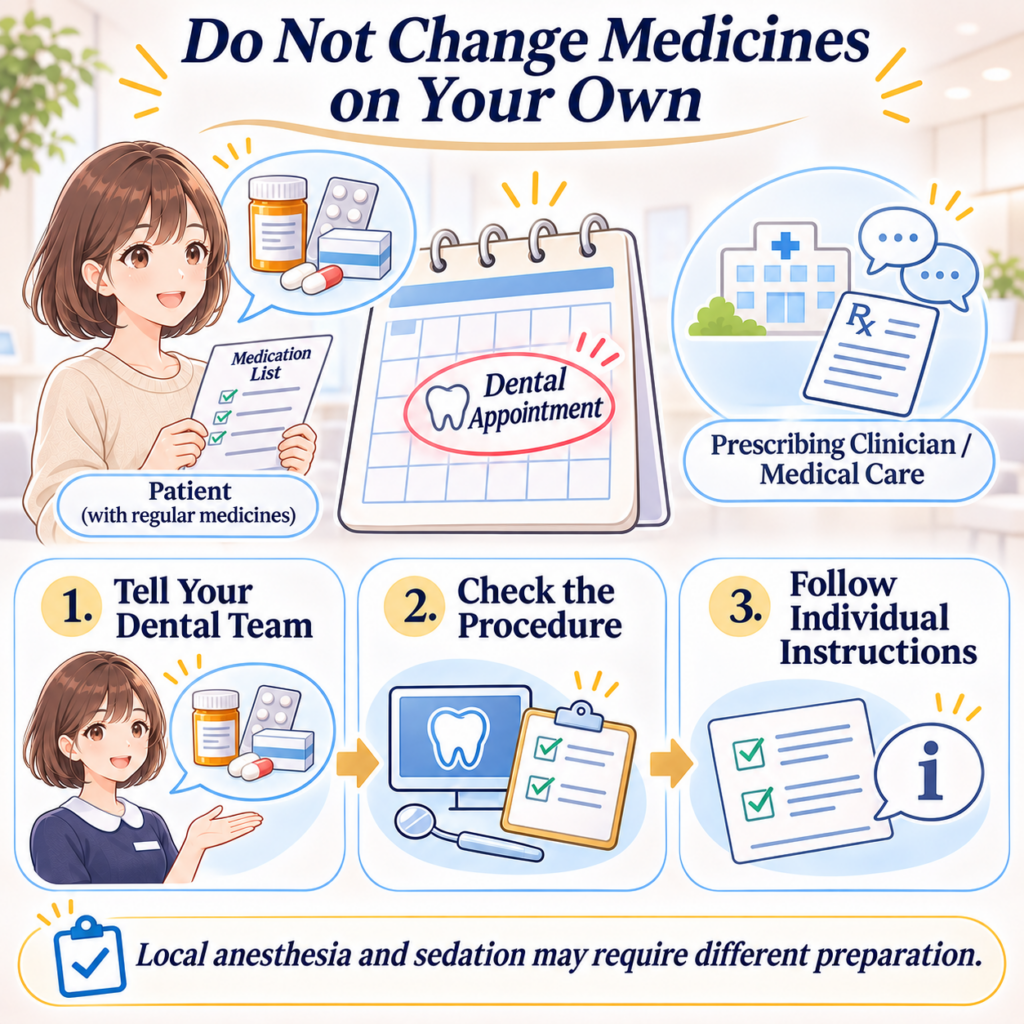
Others believe that they should avoid food and water whenever the dentist uses anesthesia.
These assumptions are not appropriate for every patient or procedure.
Do not stop or change prescribed medicines on your own because of dental treatment.
Ordinary Local Anesthesia Is Not the Same as General Anesthesia
Many common dental procedures use local anesthesia.
Local anesthesia numbs a specific area of the mouth while you remain conscious.
For many patients receiving ordinary dental treatment under local anesthesia, there is no general requirement to fast or stop regular medicines simply because an anesthetic injection will be used.
However, individual medical conditions, the planned procedure, and instructions from your healthcare professionals take priority.
If you have diabetes or another condition affected by changes in food intake, do not alter your meal or medication schedule without appropriate guidance.
What About Tooth Extraction While Taking Blood Thinners?
Many patients taking anticoagulant or antiplatelet medicines can undergo routine dental procedures without stopping treatment.
The dentist may consider the extent of treatment, bleeding risk, medical history, and relevant test results.
For some patients, coordination with the prescribing physician is appropriate.
The need for any medication adjustment must be determined individually.
Stopping anticoagulant or antiplatelet treatment unnecessarily may create a greater danger than bleeding that can be managed with appropriate local treatment.
Sedation and General Anesthesia May Require Different Preparation
Some dental treatments involve intravenous sedation, deep sedation, or general anesthesia.
Depending on the procedure and anesthesia method, you may receive specific instructions about fasting, drinking, taking diabetes medicines, and using other regular prescriptions.
Not every form of sedation has identical fasting or medication requirements.
Recommendations for medicines used around major surgery should not automatically be applied to an ordinary dental cleaning or a filling performed under local anesthesia.
Certain diabetes medicines, including SGLT2 inhibitors, have important considerations before scheduled surgery. GLP-1-based medicines may also require individualized assessment when deep sedation or general anesthesia is planned.
These are reasons to obtain specific instructions, not reasons to stop medicines independently.
If you are unsure whether your treatment involves sedation or general anesthesia, ask the dental team before changing your usual routine.
What If I Have Already Skipped or Stopped My Medicine?
Tell the dental team which medicine you stopped, when you last took it, and why you stopped.
Do not assume that taking an extra dose later will correct the situation.
Whether a medicine should be resumed, adjusted, or managed in another way depends on the medicine and the condition being treated.
If the responsible healthcare professional has already given you instructions for the dental procedure, follow those instructions and make sure the dental team knows about them.
The safest approach is to obtain clear instructions before making changes to regular treatment.
11. Can New Dental Prescriptions in Japan Interact with My Usual Medicines?
One important reason to provide your medication list is to help the dentist choose new medicines safely when they are needed.
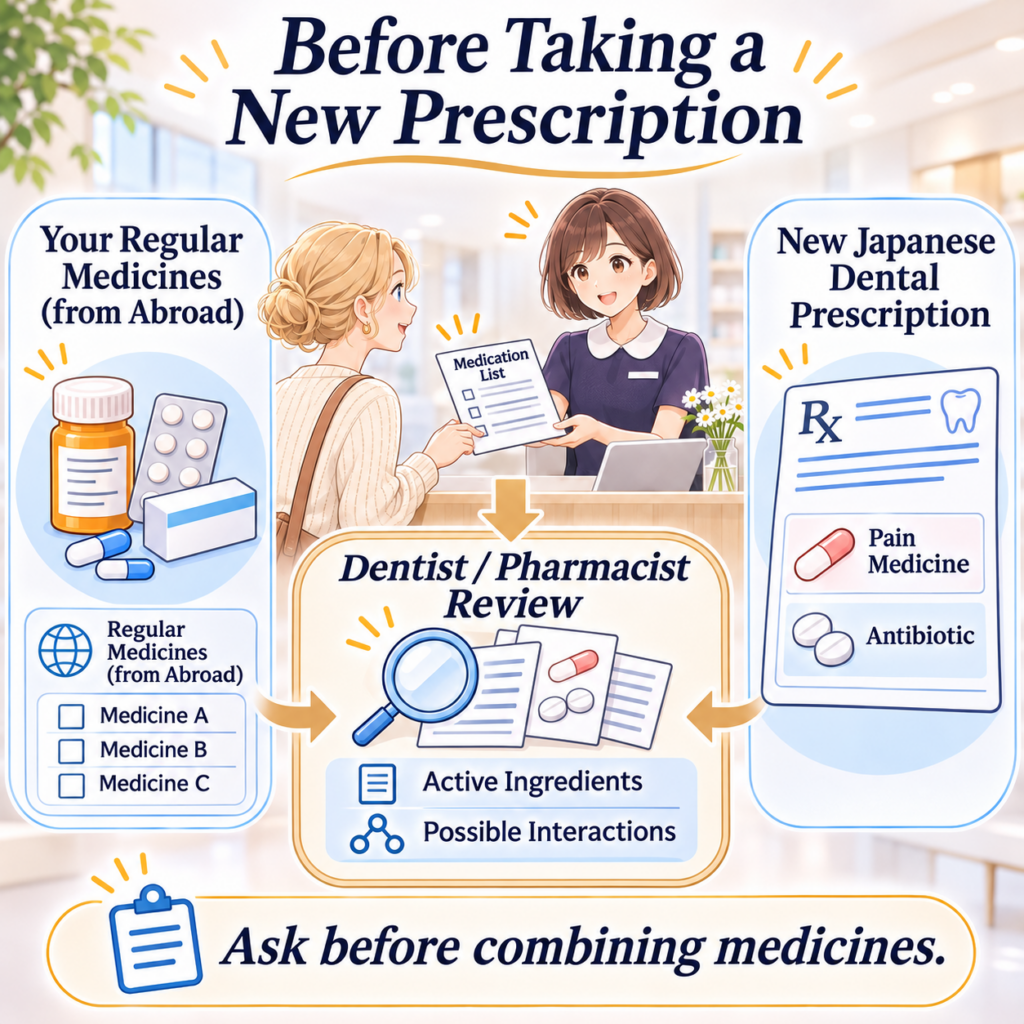
Depending on the dental condition, a Japanese dentist may prescribe a painkiller or antibiotic.
Some of these medicines can interact with prescriptions you already take for other health problems.
Painkillers and Anticoagulants
Non-steroidal anti-inflammatory drugs, known as NSAIDs, are used to relieve pain and inflammation.
Examples include ibuprofen and other medicines commonly used for pain relief.
When NSAIDs are combined with anticoagulants or certain antiplatelet medicines, bleeding risk may increase.
If you use a blood thinner, tell your dentist before taking a new painkiller.
Do not assume that a painkiller is safe to combine with your existing medicine simply because it can be purchased without a prescription in another country.
Painkillers and Other Long-Term Prescriptions
NSAIDs can also interact with medicines such as lithium, methotrexate, some antidepressants, and certain blood pressure medicines or diuretics.
Depending on the combination, possible concerns include bleeding, kidney function, or changes in drug concentration and effect.
The clinical importance of an interaction depends on the medicines, doses, duration of treatment, and patient’s health.
This does not mean that every patient taking these medicines must avoid all painkillers. It means that prescribing decisions require accurate information.
Antibiotics Can Also Interact with Medicines
Some antibiotics interact with anticoagulants, cardiovascular medicines, and other prescriptions.
For example, metronidazole can increase the anticoagulant effect of warfarin, while certain macrolide antibiotics can interact with medicines used for cardiovascular or other conditions.
These examples explain why the dental team needs your medication history. They are not instructions for patients to choose antibiotics themselves.
The NHS Scotland Scottish Dental Clinical Effectiveness Programme publishes detailed guidance on drug interactions in dental prescribing.
That guidance is written for the United Kingdom. In Japan, actual prescribing decisions must also consider Japanese product information, the patient’s medical condition, and the circumstances of treatment.
What If the Dentist Cannot Identify My Foreign Medicine?
Additional information may be needed before a new prescription can be selected safely.
For example, the dentist or pharmacist may need to review the original packaging, confirm the ingredients, or contact the prescribing healthcare provider.
Do not replace your overseas medicine with a Japanese product simply because the names look similar.
Similarly, do not combine a new Japanese prescription with medicine brought from abroad without checking whether the combination is appropriate.
Your medication list is useful not only for deciding how to treat your teeth, but also for deciding what medicines can be prescribed afterward.
12. Can Medicines Affect My Teeth, Gums, or Saliva?
Patients sometimes wonder why a dentist asks about medication prescribed for a condition unrelated to the mouth.
One reason is that some medicines can affect oral health directly.
Dry Mouth
Some antidepressants, antihistamines, blood pressure medicines, and other drugs may contribute to dry mouth.
Saliva helps protect teeth and oral tissues. Reduced salivary flow may increase the risk of dental caries, oral discomfort, and certain infections.
If your mouth became noticeably dry after starting or changing a medicine, tell your dentist.
Dry mouth has several possible causes, so medication should not automatically be assumed to be responsible.
Gum Enlargement
Some medicines, including phenytoin, ciclosporin, and certain calcium channel blockers, can be associated with gingival enlargement.
Not everyone taking these medicines experiences gum changes.
However, the medication history may help the dentist understand possible contributing factors.
Oral Infections and Mucosal Symptoms
Certain medicines may contribute to changes in the oral mucosa or susceptibility to infection.
For example, inhaled corticosteroids can be associated with oral candidiasis in some patients.
Other medicines and medical conditions can influence saliva, immune function, and oral comfort.
A dentist must consider the full clinical picture before deciding whether a medicine contributes to a particular symptom.
Do not stop treatment for a medical condition because you suspect it is affecting your mouth. Discuss the symptoms with your dentist and prescribing physician.
For further information, see the American Dental Association’s overview of xerostomia and dry mouth.
13. Can I Bring My Prescription Medicines into Japan?
Bringing medicines into Japan and showing medication information to a Japanese dentist are two different matters.
The first is an import and customs issue. The second is part of medical assessment.
Both may be important for international patients, but they should not be confused.
General Rules for Prescription Medicines
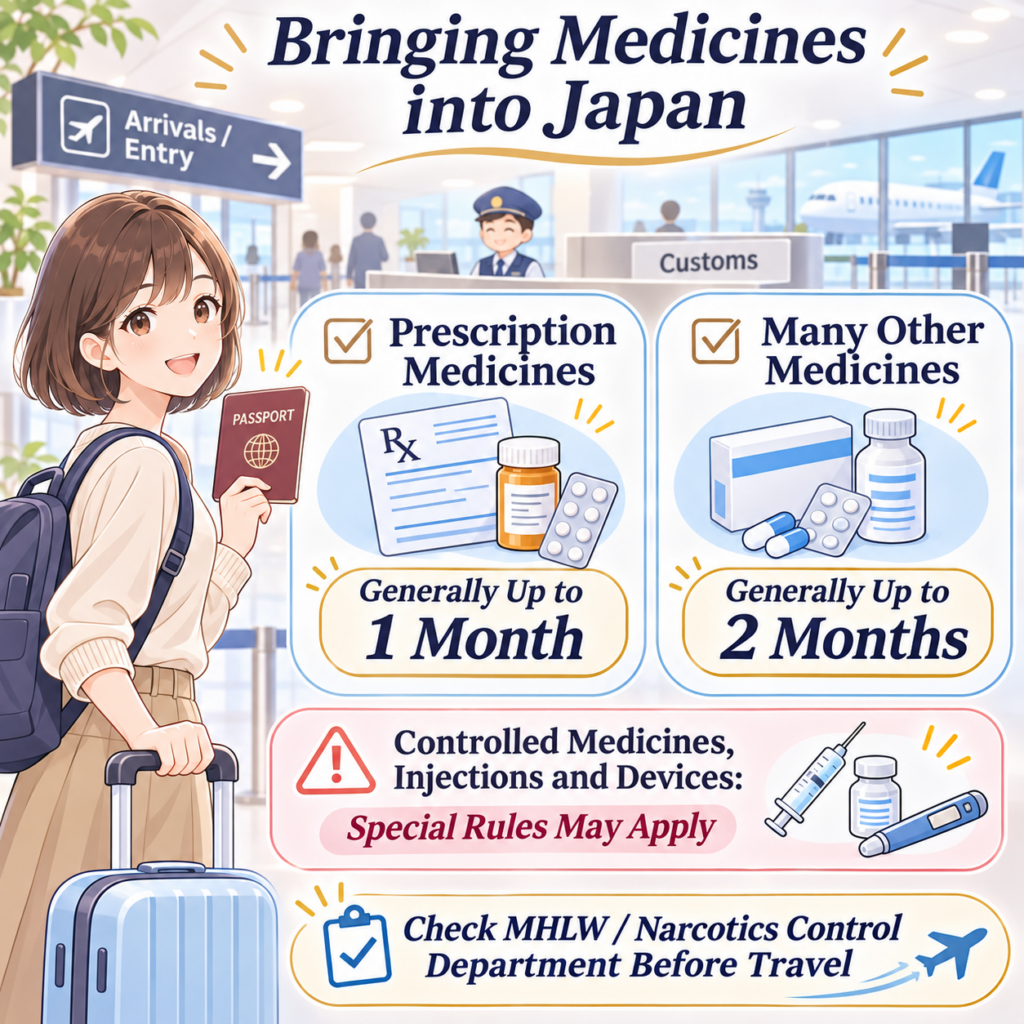
According to Japan’s Ministry of Health, Labour and Welfare, many prescription medicines for personal use can generally be brought into Japan without an Import Confirmation Certificate when the amount does not exceed a one-month supply.
For many other medicines and quasi-drugs, the general amount is up to a two-month supply.
However, these are general rules, not permission to bring every medicine into Japan.
Specific conditions apply to some medicines, including controlled substances and certain injectable medicines and medical devices.
Even a medicine legally prescribed in another country may be restricted or prohibited in Japan.
Injectable Medicines and Syringes Have Additional Conditions
Injectable medicines and injection devices require particular attention.
Under the general personal-import rules, certain pre-filled syringes or self-injection kits may be brought into Japan without Import Confirmation when they meet the relevant conditions and permitted quantity, generally up to a one-month supply.
However, bringing separate syringes or injection equipment may require additional procedures.
For example, Japan’s official import guidance explains that importing a syringe without the corresponding medicine requires Import Confirmation, even for a small quantity.
Do not assume that all injections, needles, or medical devices are covered by the general rule for prescription tablets.
Check the requirements for your exact medicine, device, and quantity before traveling.
Certain Medicines Are Controlled or Prohibited
Japan has separate legal controls concerning narcotics, stimulants, stimulant raw materials, and psychotropic medicines.
The requirements depend on the active ingredient, legal classification, quantity, and other conditions.
For example, Japan’s Narcotics Control Department states that individual travelers cannot bring Adderall into Japan because it contains amphetamine, which is prohibited from personal import even when prescribed abroad.
By contrast, medicines containing lisdexamfetamine, such as Vyvanse or Elvanse, may be brought into Japan if the required advance permission has been obtained.
These medicines are not treated identically under Japanese law, even though they may be prescribed for similar conditions in other countries.
Do not assume that all ADHD medicines, sleeping medicines, or anxiety medicines are subject to the same rules.
The legal classification and requirements must be checked for the specific active ingredient.
Where Can I Check Japan’s Official Medicine Import Rules?
The Japanese government provides official English information about bringing medicines into Japan.
For general prescription medicines, injections, devices, and Import Confirmation procedures, consult the Ministry of Health, Labour and Welfare’s guide to bringing medicines for personal use into Japan.
For narcotics, stimulants, stimulant raw materials, and certain psychotropics, consult the Narcotics Control Department’s English application guidance.
These resources explain when advance permission, Import Confirmation, or medical documentation may be required.
Requirements may change, so check the official information before departure.
A dental clinic cannot replace the government authority responsible for approving medicine imports.
Important: Permission to import a medicine into Japan and the clinical decision about using it during dental treatment are separate matters.
14. What If I Cannot Provide Complete Medication Information?
Not every patient arrives with a complete prescription record.
You may have left your medication list at home. The original packaging may be in your hotel. The label may be written in another language. You may remember what the medicine is for but not its name.
These situations do not mean that you should give up on seeking dental care.
Start with the Information You Have
Explain what medical condition you are being treated for, how often you take the medicine, and where it was prescribed.
Check whether you have prescription emails, pharmacy records, photographs, or another source that identifies the medicine.
If a family member or caregiver normally manages your medication, they may be able to help provide the correct information.
What If the Medicine Still Cannot Be Identified?
Depending on the medicine and procedure, additional information may be required before a treatment decision can be made.
For example, a patient may still be able to receive an examination, while a particular extraction or new prescription may require further confirmation.
Needing additional information does not necessarily mean that all dental care is impossible.
It means that the dental team must consider the available information and the risks of the planned treatment.
Do Not Guess to Make the Questionnaire Look Complete
If you are unsure whether a medicine is an anticoagulant, diabetes treatment, or another type of drug, say that you do not know.
If you cannot remember the dose, do not enter an estimated number as though it were certain.
Accurate uncertainty is safer than false certainty.
Reception desk tip: Even an incomplete medication record can help, as long as the missing details are clearly identified.
15. How to Share Medication Information at a Japanese Dental Clinic
Preparing your medication information is the first step. Knowing when and how to share it is equally important.
Before Booking an Appointment
If you have a significant medical condition, a history of a serious medication reaction, or a treatment that may affect dental procedures, mention it when contacting the clinic if possible.
For example, if you are seeking tooth extraction while taking an anticoagulant, it may be useful to tell the clinic before the appointment.
Likewise, if you receive osteoporosis injections, cancer-related treatment, or have a heart condition relevant to infective endocarditis prevention, informing the clinic in advance can help the dental team decide what information to request.
You do not necessarily need to read every medicine label over the telephone. The first step is to explain the important circumstances.
At the Reception Desk
When you arrive, explain that you have a medication list, prescription record, or other medical information.
If the information is on your smartphone, make sure you can open it when needed.
If you do not understand a question on the medical form, ask for clarification.
Reception staff can assist with collecting and communicating information, while the dentist remains responsible for medical assessment and treatment decisions.
During the Medical Questionnaire and Examination
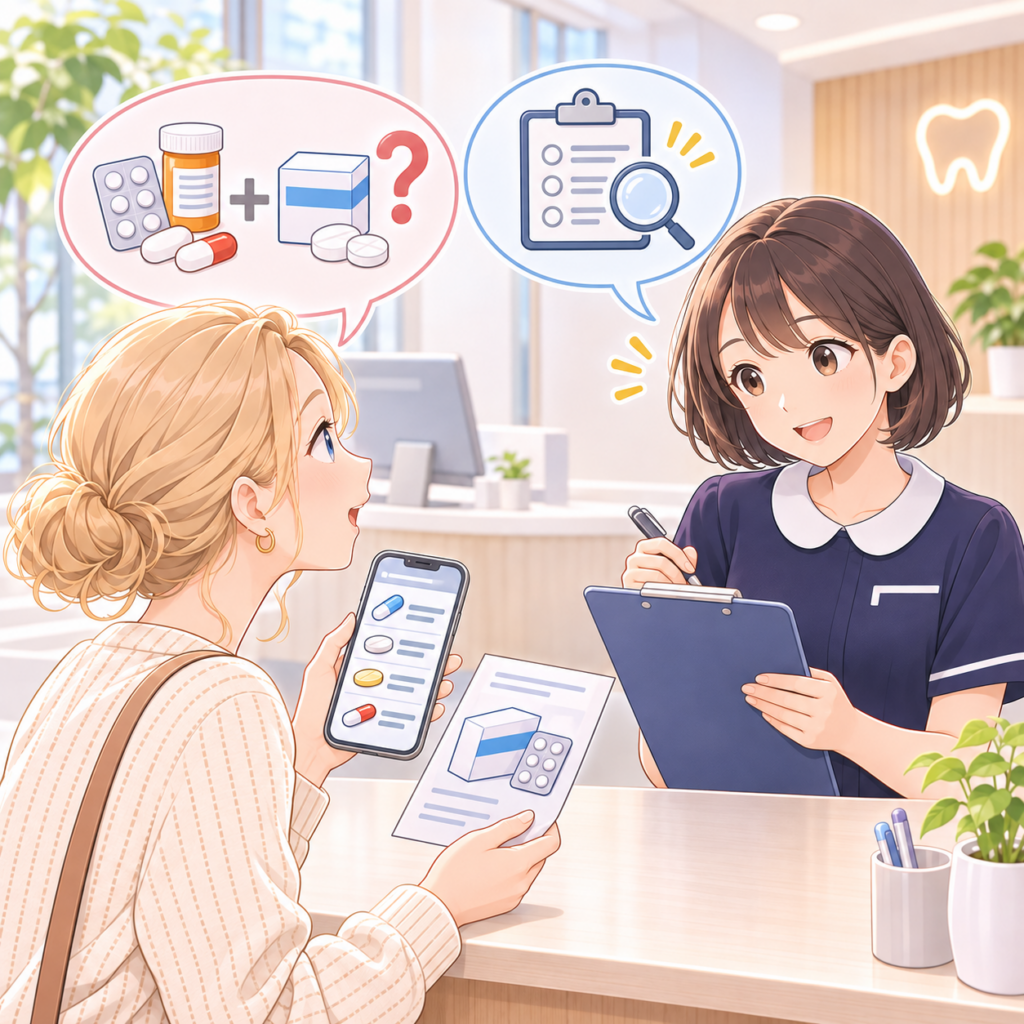
A Japanese dental questionnaire may ask about medical conditions, medicines, allergies, pregnancy, breastfeeding, and previous problems during dental treatment.
Answer as accurately as possible. Do not leave out an important medical condition simply because it seems unrelated to your teeth.
Before local anesthesia, extraction, surgery, or new prescriptions, the dentist may need to review your medical history in more detail.
Depending on the situation, treatment may proceed as planned, further information may be required, or communication with another healthcare professional may be appropriate.
This is part of appropriate treatment planning, not merely an administrative formality.
Before Taking a New Medicine Home
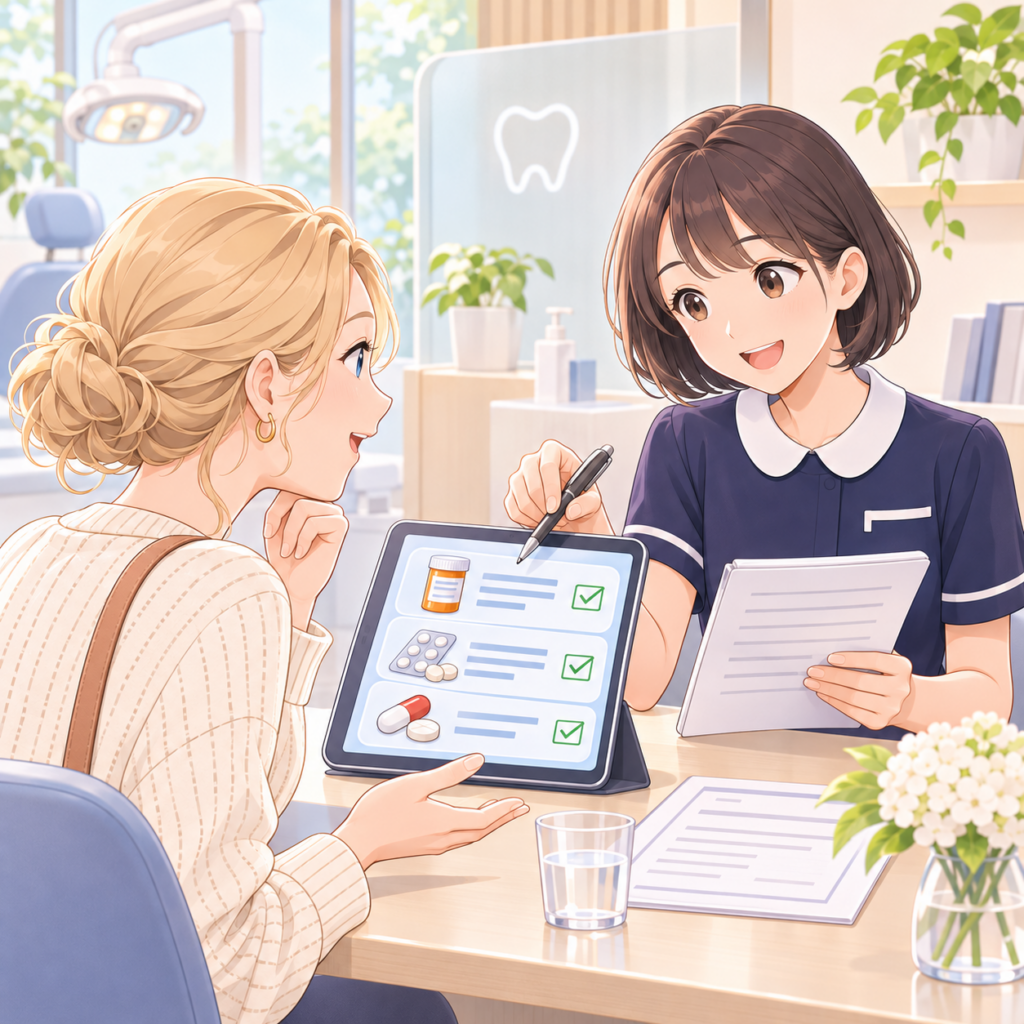
If you receive a new prescription after dental treatment, make sure you understand what it is for and how to use it.
Ask whether it can be taken with your regular medicines, including medicines brought from overseas.
If you already have a painkiller or antibiotic, explain that before beginning the new prescription.
Do not assume that two medicines are safe to combine simply because both are intended to treat pain or infection.
If Your Medication Changes During Ongoing Dental Treatment
Medication information should be updated when circumstances change.
If a doctor starts a new medicine, changes a dose, discontinues a prescription, or begins an injection treatment, inform your dental team at your next relevant appointment.
This is particularly important when dental treatment continues over several visits.
16. Five Common Situations International Patients May Experience
The following examples are fictional. They illustrate the kind of information that may be useful during dental visits in Japan, not specific treatment recommendations.
Case 1: A Tourist Who Took Painkillers Before Visiting the Dentist
A traveler staying in Hiroshima develops severe tooth pain overnight.
The traveler takes a painkiller purchased in their home country. The package has an unfamiliar product name, and the traveler does not know whether it contains acetaminophen or another ingredient.
Before visiting the dentist, the traveler photographs the full label and writes down when the medicine was taken and how many tablets were used.
This information may help the dental team review what has already been taken before considering another prescription.
The lesson is not that tourists must identify every ingredient themselves. It is that the original medicine information should be available for checking.
Case 2: A Foreign Resident Taking an Anticoagulant
A foreign resident in Japan takes an anticoagulant for atrial fibrillation.
When a painful tooth may require extraction, the patient assumes the anticoagulant should be stopped several days beforehand.
Instead of stopping it, the patient brings an updated medication list and explains why the medicine was prescribed.
The dentist can then assess the planned procedure, relevant risks, and whether consultation with the prescribing physician is necessary.
The lesson is that medication decisions should be made using accurate clinical information rather than assumptions about dental extraction.
Case 3: A Patient Who Previously Received Osteoporosis Injections
A patient moved to Japan after receiving osteoporosis treatment overseas.
The patient does not currently take any daily tablets and initially plans to answer “No” when asked about medicines.
However, the patient received injections at a hospital every few months and still has a treatment record.
By sharing that record, the patient helps the dental team understand the medicine involved and the timing of treatment.
The lesson is that medication history includes more than the tablets taken today.
Case 4: A Patient Who Felt Unwell During Dental Anesthesia
A patient remembers fainting after a dental injection many years ago.
The patient was told that an allergic reaction might have occurred but never received a confirmed diagnosis.
At the next dental appointment, the patient explains the event and describes the symptoms rather than automatically stating that all local anesthetics are unsafe.
The dentist can then consider whether further assessment or consultation is necessary.
The lesson is that details of a previous reaction can be more informative than an uncertain label.
Case 5: A Patient With a Heart Valve Condition
A patient who previously received dental care in another country has a history of heart valve disease.
In the patient’s home country, preventive antibiotics were not prescribed before a previous dental appointment.
The patient assumes that antibiotics will never be necessary for dental care in Japan.
Instead, the patient tells the Japanese dentist the exact heart condition and provides a recent cardiology record.
The dentist can then assess the condition and planned dental procedure using the applicable Japanese guidance, including the 2026 Japanese Circulation Society recommendations.
The lesson is that medical guidelines may differ between countries, and an individual cardiac diagnosis matters more than assuming that all dental procedures are handled identically everywhere.
17. Useful English Phrases for a Dental Appointment in Japan
You do not need complicated medical English to begin explaining your medication history.
The following phrases may help you communicate important information. Japanese translations are provided for reference.
Explaining Regular Medication
“I take prescription medicine every day.”
毎日、処方薬を服用しています。
“This medicine was prescribed in my home country.”
この薬は母国で処方されました。
“I have a medication list on my phone.”
スマートフォンに服薬一覧があります。
“I do not remember the medicine’s name, but I have a photo of the label.”
薬の名前を覚えていませんが、ラベルの写真があります。
Explaining Injections and Past Treatment
“I receive injections for osteoporosis.”
骨粗鬆症の注射治療を受けています。
“I received this medicine several months ago.”
この薬を数か月前に使用しました。
“I have a treatment record from my hospital overseas.”
海外の病院での治療記録があります。
Explaining Painkillers
“I took a painkiller this morning.”
今朝、痛み止めを飲みました。
“I took two tablets at about eight thirty.”
8時30分ごろに2錠飲みました。
“I am not sure what ingredients this medicine contains.”
この薬にどのような成分が含まれているか分かりません。
Explaining Allergies and Previous Reactions
“I had a rash after taking this antibiotic.”
この抗菌薬を飲んだあとに発疹が出ました。
“I had trouble breathing after taking a medicine.”
薬を服用したあと、呼吸が苦しくなったことがあります。
“I felt faint after a dental injection in the past.”
以前、歯科麻酔の注射後に気分が悪くなりました。
“I do not know whether it was an allergic reaction.”
アレルギー反応だったかどうか分かりません。
Explaining Heart Conditions and Pregnancy
“I have an artificial heart valve.”
人工心臓弁が入っています。
“I have had infective endocarditis before.”
以前、感染性心内膜炎にかかったことがあります。
“I have a heart valve condition, and I would like to know whether I need preventive antibiotics.”
心臓の弁に病気があり、予防的な抗菌薬が必要か確認したいです。
“I am pregnant, and I would like to check which medicines are appropriate.”
妊娠中なので、使用できる薬について確認したいです。
“I am breastfeeding.”
授乳中です。
Asking About Dental Treatment and Prescriptions
“Should I continue taking my usual medicines before treatment?”
治療前も普段の薬を続けてよいですか?
“Will I need sedation or general anesthesia?”
鎮静や全身麻酔を受ける予定ですか?
“Is this new medicine safe to take with my regular medication?”
この新しい薬は普段の薬と一緒に使えますか?
“Could you please explain how and when I should take this medicine?”
この薬の飲み方と服用時刻を説明していただけますか?
These phrases can help start a conversation, but they do not replace a reliable medication record.
If you need language assistance, contact the dental clinic before your appointment to ask what support is available. English-language services and interpretation arrangements vary between institutions.
18. Frequently Asked Questions
Q1. Can I Show Photos of My Medicines Instead of Bringing the Packages?
Yes. Clear photographs showing the product name, active ingredients, strength, and instructions may help the dental team review your medication information.
However, a photograph may not always provide enough detail for accurate identification. Additional records or the original packaging may sometimes be needed.
You do not necessarily need to bring every medicine container, but you should make the most reliable information available.
Q2. What If My Medicine Label Is Not in English or Japanese?
Keep the original label and show any prescription or pharmacy record that may help identify the medicine.
Translation applications can help with basic communication, but medicine names, doses, and units should not be accepted solely on the basis of an uncertain automatic translation.
If identification remains uncertain, further verification may be needed before a procedure or new prescription.
Q3. Should I Tell My Dentist About Injections I Received Several Months Ago?
Yes. Some injections and infusions can remain relevant to dental care after administration.
This is particularly important for certain medicines used for osteoporosis or cancer-related bone conditions.
Tell your dentist the medicine name, treatment purpose, and most recent administration date if known.
A history of treatment does not automatically mean a dental procedure is unsafe, but it may be important for assessment.
Q4. I Took Painkillers Before My Appointment. What Should I Tell the Dentist?
Tell the dentist the product name, active ingredients if known, strength, amount taken, and approximate time.
Show the original package or a clear photograph if available.
Some products sold under different names contain the same ingredients, and certain cold medicines contain pain-relieving ingredients.
Do not take additional doses or combine medicines beyond the instructions without professional advice.
Q5. Should I Stop My Regular Medicines Before Dental Treatment?
Do not stop prescribed medicines on your own simply because you have a dental appointment.
Many routine dental treatments can be performed without interrupting regular medication, but individual circumstances differ.
Procedures involving sedation, general anesthesia, significant surgery, or certain medical conditions may require specific instructions.
If you have not received clear instructions, contact the dental clinic or the healthcare professional responsible for your medication before making changes.
19. Final Medication Checklist Before Visiting a Dentist in Japan
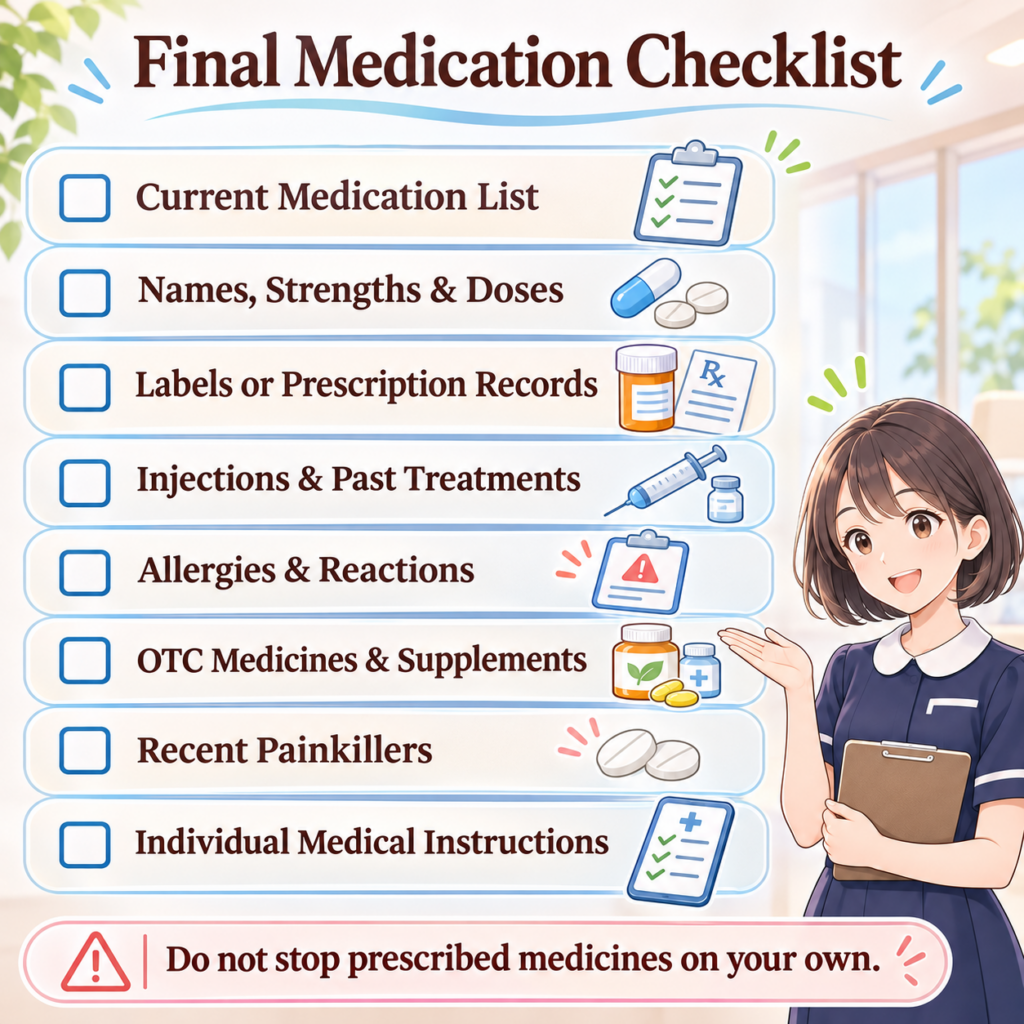
Before your appointment, use this final checklist to confirm that your medication information is ready.
- Prepare an up-to-date list of prescription medicines.
- Include brand names, generic names or active ingredients, strengths, and doses when available.
- Bring prescription records or clear photographs of labels if helpful.
- Include medicines used only when necessary, such as painkillers.
- Tell the dentist about injections, infusions, and relevant past treatments.
- Include over-the-counter medicines, herbal products, vitamins, and supplements.
- Prepare information about allergies and previous reactions.
- Tell the dentist about relevant heart conditions, including artificial heart valves and previous infective endocarditis.
- Record medicines taken recently, including their approximate amount and timing.
- Keep prescribed emergency medicines accessible according to your usual instructions.
- Follow individual instructions about eating, drinking, and taking medicines before treatment.
- Do not stop or change prescribed medicines on your own.
- Update your dental team if your medication changes during ongoing treatment.
You do not have to prepare every possible document for every appointment.
The goal is to make accurate and relevant information available when the dental team needs it.
20. A Message from the Reception Desk at Blanc Dental Clinic
Visiting a dentist in another country can feel stressful, especially when you have a medical condition or take prescription medicines.
You may not know how Japan’s healthcare system works. Your medicine may be sold under a different name in Japan. You may not have a Japanese medication notebook, and you may find it difficult to explain a previous allergic reaction in another language.
You may also have been given different instructions about medicines or preventive antibiotics by healthcare professionals in another country.
These are understandable concerns.
However, you do not need to memorize every drug name or understand every medical term before asking for dental care.
The important first step is to collect the information you have and explain it as accurately as possible.
A medication list, an old prescription, a photograph of a package, or a treatment summary from your doctor can help communicate information that might otherwise be difficult to describe.
At the reception desk, our role is to help patients share relevant information and make sure that important concerns reach the dental team.
The dentist can then determine whether further information is needed and what treatment is appropriate.
Sometimes treatment can proceed as planned. At other times, a medicine may need to be checked, another healthcare professional may need to be consulted, or the treatment plan may need to be adjusted.
These decisions are part of providing appropriate dental care.
Remember: you do not necessarily need to bring every medicine you own, but it is important to tell your dentist what medicines you use.
If you are planning dental care while traveling, studying, working, or living in Hiroshima, preparing your medication information before your appointment can help make the visit more straightforward and the clinical assessment more reliable.
We hope this guide helps you feel better prepared for your next dental visit in Japan.
Related Guides for International Patients
If you are preparing to visit a dentist in Japan, you may also find these English-language guides helpful.
Identification and insurance: Do You Need a Passport or Residence Card to See a Dentist in Japan? explains important distinctions between identification documents and Japanese health insurance eligibility.
Unexpected dental injuries: Broke a Tooth in Japan—Can a Dentist See Me Today? explains how to describe a dental injury and when prompt assessment may be needed.
Travel insurance: Can Travel Insurance Cover Dental Care in Japan? explains how dental benefits, direct billing, and reimbursement may differ between insurance policies.
For readers who can read Japanese, our related article 歯医者にお薬手帳は必要?持病・服薬を伝える理由と受付で確認したいこと provides additional information about medication notebooks and preparing for dental visits.
References and Official Resources
The following government resources, professional guidance, and scientific publications were consulted when preparing this article. Clinical recommendations must always be applied to individual circumstances.
Japanese Government and Medical Resources
1. Ministry of Health, Labour and Welfare, Japan. Dental Questionnaire, English/Japanese. March 2018. Official questionnaire (PDF).
2. Ministry of Health, Labour and Welfare, Japan. Multilingual Explanation Materials for Foreign Patients. Official multilingual materials.
3. Ministry of Health, Labour and Welfare, Japan. Information for Those Who Are Bringing Medicines for Personal Use into Japan. Official English guidance.
4. Ministry of Health, Labour and Welfare, Japan. Questions and Answers on Bringing or Sending Medicines into Japan. Official English Q&A (PDF).
5. Narcotics Control Department, Ministry of Health, Labour and Welfare, Japan. Application Guidance. Official English guidance on controlled medicines.
6. Pharmaceuticals and Medical Devices Agency, Japan. PMDA Medicine Search. Official Japanese-language search information.
7. Kishimoto H. Position Paper on Medication-Related Osteonecrosis of the Jaw 2023 Update: Key Points for Revision and Future Issues. Japanese Journal of Oral and Maxillofacial Surgery. 2025;71(8):344–348. Journal article.
8. Japan National Tourism Organization. Official guidance for visitors seeking medical or emergency assistance in Japan. Emergency ambulance telephone number: 119. Official travel and medical assistance guidance.
Japanese Cardiovascular Guidelines
9. Izumi C, Daimon M, Kaji S, et al. JCS 2026 Guideline on the Management of Infective Endocarditis. Circulation Journal. 2026;90(8):1114–1202. doi:10.1253/circj.CJ-25-0987. Published July 24, 2026. Full guideline in English.
Dental and Medical Professional Guidance
10. American Dental Association. Medical/Dental Health History. Includes updated information on GLP-1 medication questions. Official resource.
11. American Dental Association. Oral Anticoagulant and Antiplatelet Medications and Dental Procedures. Official resource.
12. American Dental Association. Osteoporosis Medications and Medication-Related Osteonecrosis of the Jaw. Official resource.
13. American Dental Association. Antibiotic Prophylaxis Prior to Dental Procedures. Official resource.
14. American Dental Association. Pregnancy. Dental care and treatment considerations during pregnancy. Official resource.
15. American Dental Association. Diabetes. Official dental health resource.
16. American Diabetes Association Professional Practice Committee. Diabetes Care in the Hospital: Standards of Care in Diabetes—2026. Diabetes Care. 2026;49(Supplement 1). Journal article.
17. Scottish Dental Clinical Effectiveness Programme, NHS Scotland. Drug Interactions in Dental Prescribing. Official prescribing guidance.
18. American Dental Association. Antibiotic Use for the Urgent Management of Dental Pain and Intraoral Swelling. Guideline resources.
19. American Dental Association. Xerostomia (Dry Mouth). Clinical overview.
20. NHS Specialist Pharmacy Service. Managing Reactions to Dental Local Anaesthetic Injections. Published July 29, 2024; updated July 30, 2024. Official professional guidance.
21. Centers for Disease Control and Prevention. Clinical Features of Penicillin Allergy. Official clinical information.
Travel Medicine and Medication Safety
22. Centers for Disease Control and Prevention. CDC Yellow Book 2026: Traveling with Prohibited or Restricted Medications. Official travel medicine guidance.
23. U.S. Food and Drug Administration. Don’t Overuse Acetaminophen. Official medication safety information.
Information reviewed: November 2026. Medication regulations, clinical guidelines, and professional recommendations may change. For medicine import requirements, consult current official Japanese government information before traveling. Individual dental treatment and medication decisions must be made with the appropriate healthcare professionals.